Golf is a sport highly influenced by weather and lighting conditions, where visibility directly impacts accuracy, distance judgment, and overall performance. Bright sunlight, cloudy skies, fog, or shifting light throughout the day can all affect how players see the ball and the course. Because of this, selecting the right eyewear is essential for maintaining consistent visual clarity. Many players also rely on guidance from a golf sunglasses supplier to choose lenses and frame designs that match specific environmental needs. Understanding how different weather conditions affect vision can help golfers make smarter equipment decisions and improve on-course performance.
Choosing Golf Sunglasses for Sunny and Bright Conditions
Strong sunlight creates glare and visual fatigue, making proper lens selection especially important.
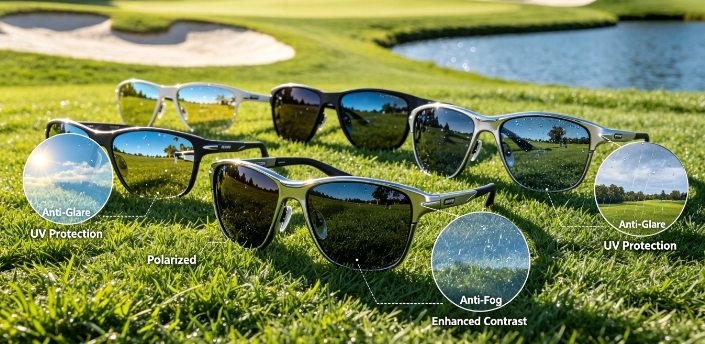
- Dark-tinted lenses for glare reduction: Gray or brown lenses help reduce overall brightness while maintaining natural color balance, making them suitable for open fairways under direct sun.
- Polarized lenses for reflection control: Water hazards, sand bunkers, and shiny surfaces can create intense reflections. Polarized coatings reduce this glare and improve visual comfort.
- UV protection for eye safety: High-quality lenses with UV400 protection help block harmful rays during long exposure, reducing long-term eye strain.
In these conditions, players should prioritize comfort and glare control to maintain stable focus throughout the round.
Best Lens Options for Cloudy or Overcast Weather
Cloudy conditions reduce brightness but also flatten contrast, which can make it harder to read terrain and track the ball.
Enhancing contrast in low light
Different lens tones help improve visibility when the sunlight is weak.
- Yellow or amber lenses brighten the field and improve object separation.
- Light brown lenses enhance depth perception on uneven greens.
- Slightly tinted lenses help maintain visual clarity without over-darkening the scene.
Adapting to unstable lighting
During a round of competition, the weather can change rapidly; therefore, maintaining flexibility is crucial.
- Medium-tone lenses work well in mixed light conditions.
- Anti-reflective coatings help reduce scattered light from clouds.
- Lightweight frames improve comfort during long play under dull lighting.
These features help players maintain better visual definition even when natural light is limited.
Selecting Eyewear for Rainy or Foggy Conditions
Wet weather introduces challenges such as reduced contrast, water droplets, and fogging issues.
- Anti-fog lens technology: Prevents condensation buildup during temperature changes, ensuring clear vision throughout the game.
- Hydrophobic coatings: Help water slide off the lens surface quickly, improving visibility during rain.
- High-contrast tints: Slightly enhanced color filters help distinguish the ball against darker, wet backgrounds.
These features are especially useful for maintaining consistent performance in unpredictable weather.
Why Professional Guidance Matters in Lens Selection
Given that different weather conditions require different optical solutions, expert advice is particularly valuable. A professional golf sunglasses supplier typically understands how lens materials, coatings, and frame designs perform in real playing environments.
- They can recommend lens colors based on regional weather patterns and course conditions.
- They often provide multiple lens options for interchangeable use across seasons.
- They ensure frame compatibility with performance needs such as stability, ventilation, and comfort.
This type of guidance helps players avoid choosing eyewear based only on appearance, focusing instead on actual performance benefits.
How to Match Sunglasses to Your Playing Style
Beyond weather conditions, an individual’s playing style also influences the best choice of sunglasses.
- Players who focus on long-distance shots may prefer contrast-enhancing lenses for better depth perception.
- Those who play in varied climates benefit from interchangeable lens systems.
- Golfers who play frequently in sunny regions should prioritize UV protection and glare control.
- Casual players may choose versatile medium-tone lenses that perform well across multiple conditions.
Balancing weather adaptation with personal playing habits ensures more consistent visual performance on the course.
Conclusion
Choosing the right golf sunglasses for different weather conditions requires understanding how light, contrast, and environmental factors affect vision on the course. Sunny conditions demand glare reduction and UV protection, while cloudy and rainy weather require contrast enhancement and anti-fog performance. By selecting appropriate lens types and frame features for each situation, players can maintain clearer vision and better control over their game. Consulting a reliable golf sunglasses supplier can further help golfers find suitable options tailored to both weather conditions and individual playing styles.
0