Selecting the right floor coating is a crucial step in ensuring long-term durability, safety, and cost efficiency for any project. Whether the application is in industrial facilities, commercial buildings, warehouses, or residential garages, the performance of the flooring system directly affects daily operations and maintenance requirements. Because different environments have different demands, many decision-makers consult professional floor coating suppliers to identify the most suitable solution. Choosing correctly from the beginning helps avoid premature damage, unnecessary repairs, and operational downtime.
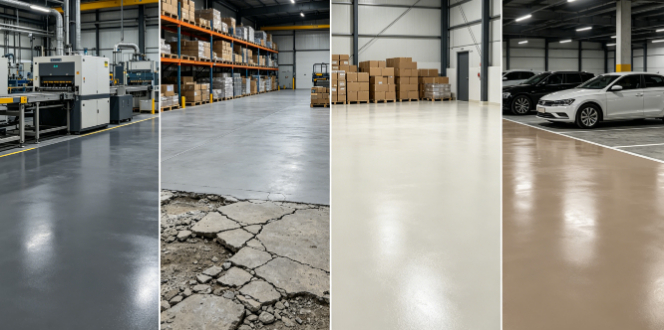
Understand Your Project Environment and Usage Conditions
The first step in choosing the right coating is to clearly analyze how the floor will be used and what conditions it will face.
- Traffic load and frequency: High-traffic areas such as warehouses and factories require coatings that can withstand constant movement from forklifts, machinery, and heavy equipment without wearing down quickly.
- Exposure to chemicals or moisture: Environments like laboratories, workshops, or food processing areas often involve spills, requiring coatings that resist chemical reactions and water penetration.
- Temperature and climate conditions: Areas exposed to temperature fluctuations or outdoor conditions need flexible coatings that can expand and contract without cracking.
Understanding these factors ensures the selected system matches real-world demands rather than just visual expectations.
Compare Different Types of Floor Coating Systems
Different coating materials offer unique performance characteristics, and selecting the right type is essential for long-term success.
- Epoxy coatings: Known for high strength and excellent adhesion, epoxy is ideal for industrial environments with heavy loads and chemical exposure. It creates a hard, durable surface that resists abrasion and wear.
- Polyurethane coatings: These provide flexibility and UV resistance, making them suitable for areas exposed to sunlight or temperature changes. They also perform well in environments requiring impact resistance.
- Polyaspartic coatings: Valued for fast curing and high performance, these coatings are ideal for projects that require quick installation and minimal downtime.
- Acrylic coatings: A cost-effective option for light-duty applications such as commercial offices or decorative spaces where extreme durability is not required.
Each system has strengths, so matching the material to the environment is key.
Evaluate Performance Requirements in Detail
Beyond material type, performance expectations should be carefully considered to ensure long-term satisfaction.
- Durability expectations: Determine whether the floor needs to support heavy machinery, frequent traffic, or occasional use. This directly impacts coating thickness and type selection.
- Safety requirements: In many commercial and industrial spaces, anti-slip properties are essential to reduce accident risks, especially in wet or oily environments.
- Maintenance goals: Some coatings are designed for easy cleaning and low maintenance, which can significantly reduce long-term operational costs.
By clearly defining performance requirements, project owners can narrow down suitable options more efficiently.
Consider Installation Quality and Professional Support
Even the best coating material can fail if not properly installed, making application quality a critical factor.
- Surface preparation importance: Proper grinding, cleaning, and crack repair are essential to ensure strong bonding between the coating and concrete. Poor preparation often leads to peeling or early failure.
- Installation conditions: Temperature, humidity, and curing time must be controlled to achieve optimal performance.
- Professional expertise: Working with experienced installers or reliable floor coating suppliers helps ensure correct product selection and proper application techniques.
High-quality installation directly determines how long the coating will perform effectively.
Balance Budget with Long-Term Value
Cost is always an important consideration, but it should be evaluated in terms of long-term benefits rather than only initial investment.
- Upfront vs lifecycle cost: While premium coatings may cost more initially, they often reduce maintenance and repair expenses over time.
- Downtime savings: Faster installation systems can reduce operational interruptions, saving indirect costs.
- Replacement frequency: Durable coatings extend floor lifespan, reducing the need for frequent resurfacing or replacement.
A balanced approach ensures both financial efficiency and performance reliability.
Conclusion
Choosing the right floor coating requires careful evaluation of the environment, material type, performance needs, installation quality, and long-term cost considerations. There is no universal solution, as each project has unique requirements. By understanding these factors and consulting experienced floor coating suppliers when needed, project owners can select a system that delivers durability, safety, and cost efficiency. A well-chosen coating not only protects the floor but also enhances the overall functionality and value of the space for years to come.
0