Traffic management at busy intersections involves much more than the mere flashing of lights. The Vehicle Traffic Signal is a device used to manage the right-of-way of various traffic movements through the intersection in a certain order. With the help of programming, vehicle detection, and signal coordination, it is possible to control vehicle queues and minimize conflicts among competing flows. The efficiency of the Vehicle Traffic Signal will depend on its responsiveness to traffic conditions. To do that, signal timing should take into account several considerations, such as traffic volumes, lanes, pedestrian crossings, turns, and peak hours.
1. How Does a Vehicle Traffic Signal Manage Vehicle Movements?
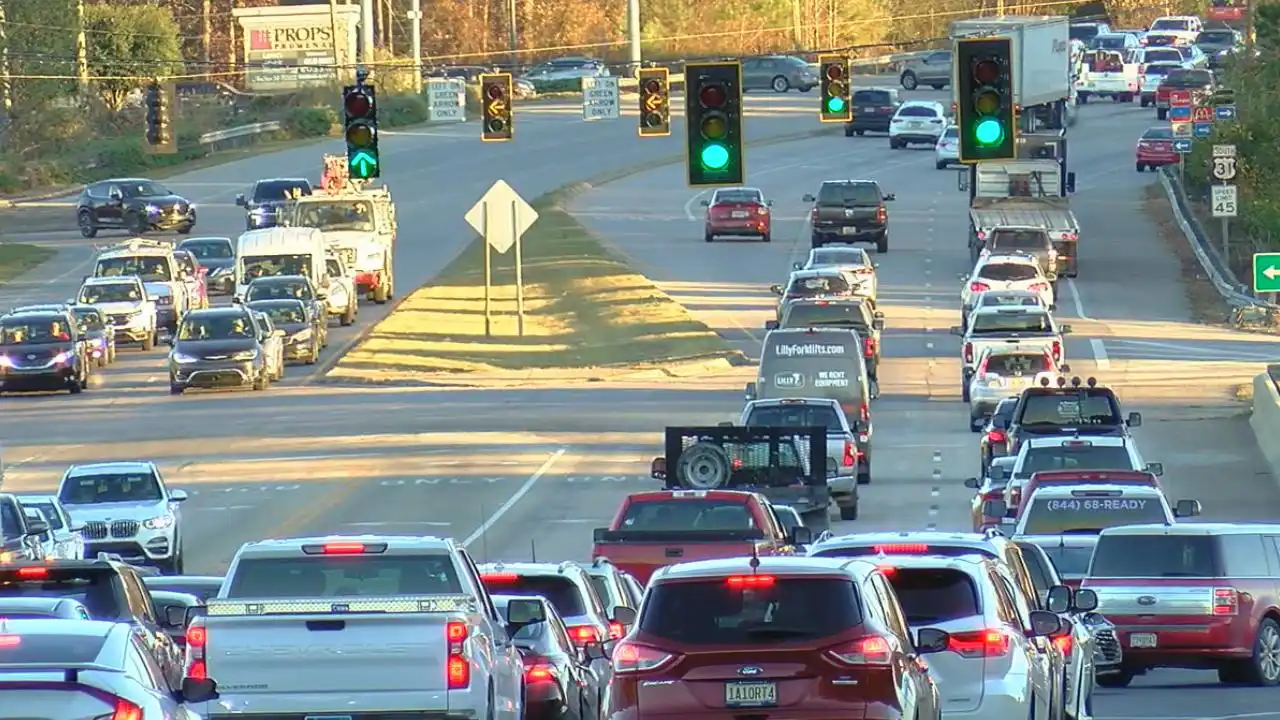
A Vehicle Traffic Signal manages vehicle movements by assigning specific periods for different traffic streams to move. Instead of allowing all approaches to use an intersection simultaneously, the signal separates conflicting movements into controlled stages.
Control Right-of-Way at Intersections
The Vehicle Traffic Signal allocates the right-of-way to various traffic movements at the intersection. If one flow gets a green light, other conflicting flows stay stopped. A typical signal cycle may last around 60–120 seconds, with different periods allocated according to traffic volume, lane layout, and turning movements.
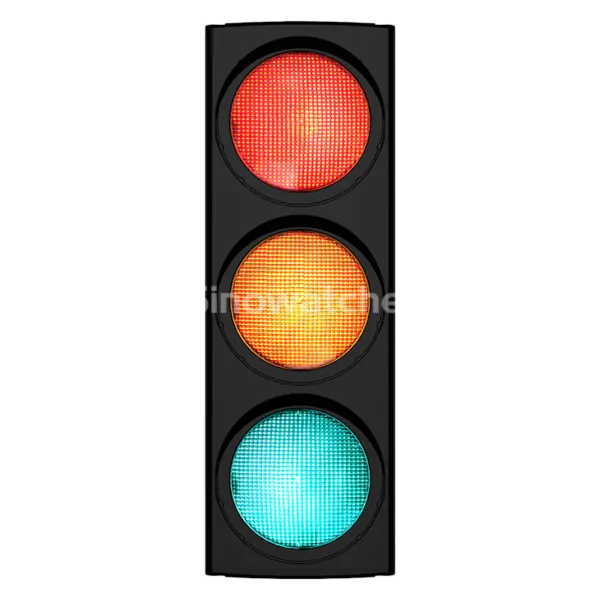
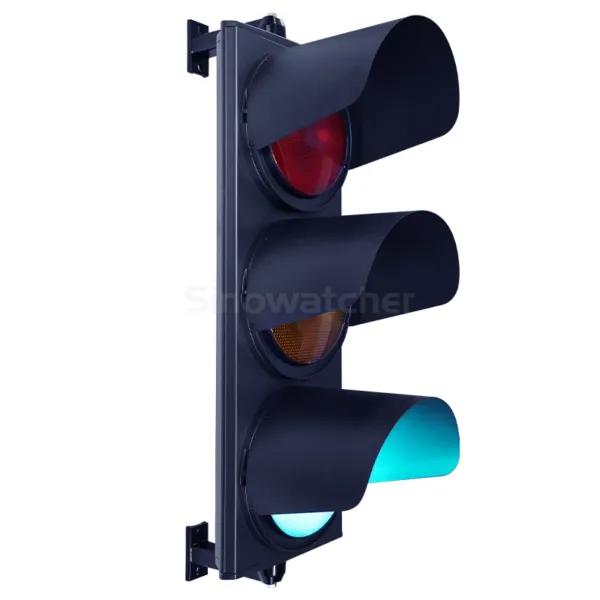
For intersections that need clear and reliable signal indications, Sinowatcher’s 300mm Aluminum LED Traffic Signal is a practical option. The 300mm signal size provides clear visual guidance, while the LED light source supports consistent red, yellow, and green indications. Its aluminum housing is also suitable for outdoor traffic-control environments.
- 300mm signal diameter for intersection traffic control
- LED light source for bright and clear indications
- Aluminum housing for outdoor installation
- Multiple configurations for different traffic-control requirements
Organize Traffic Through Signal Phases
Signal phases divide an intersection’s operation into controlled stages. A Vehicle Traffic Signal may use separate phases for through traffic, protected left turns, right turns, or other movements depending on the road design. A basic sequence may include:
- Green phase for through traffic
- Yellow transition phase
- All-red clearance interval
- Green phase for another traffic movement
The exact duration varies according to road geometry and traffic requirements. Yellow intervals are often only a few seconds, while green phases can be considerably longer when traffic demand is high.
2. How Does a Vehicle Traffic Signal Respond to Traffic Demand?
Modern traffic control is not necessarily based on fixed timing alone. A Vehicle Traffic Signal can work with detection equipment and programmed control logic to respond to changes in traffic demand. This allows signal operation to better reflect actual conditions on the road.
Detect Vehicles and Traffic Conditions
Vehicle detection allows the signal controller to know whether vehicles are waiting for, approaching, or moving through the intersection. This depends on the system that is installed, in terms of either inductive loops, video cameras, radar, or any other means of detection.
For example, if there are just a few vehicles on a side road and there is heavy traffic on the main road, detection data may be useful in eliminating the wastage of green time on an approach with no vehicles. Detection also provides useful information for adaptive traffic management systems.
Adjust Green Time Based on Vehicle Demand
A Vehicle Traffic Signal can use detected traffic conditions to modify green time within programmed limits. If the traffic approach continues receiving vehicles, the controller extends the green light for the approach if it is permitted by the control policy.
For example, at an intersection whose maximum green time is 60 seconds, if the approach continues receiving vehicles within the permissible extension time, the light will remain green until the predetermined time. This approach can help reduce excessive queue formation without allowing one movement to occupy the intersection indefinitely.
Use Timing Parameters to Manage Queues
Queue management requires several timing parameters rather than green time alone. A Vehicle Traffic Signal may consider minimum green, maximum green, yellow time, all-red clearance, cycle length, and coordination offsets.
| Parameter | Main Function |
| Minimum green | Provides sufficient time for initial vehicle discharge |
| Maximum green | Limits how long one movement can retain priority |
| Yellow interval | Alerts drivers that the green signal is about to end |
| All-red interval | Provides clearance time between conflicting phases |
| Cycle length | Defines the complete signal sequence |
| Offset | Coordinates timing between nearby intersections |
These parameters must be selected according to traffic engineering requirements. Poorly balanced settings can create unnecessary queues even when the signal hardware itself is functioning correctly.
3. How Does a Vehicle Traffic Signal Improve Traffic Flow?
The primary traffic-flow benefit of a Vehicle Traffic Signal comes from organizing movement rather than simply increasing the amount of green time. Effective control reduces conflicts, distributes available intersection capacity, and helps vehicles move through connected road networks more consistently.
Reduce Unnecessary Stops and Delays
A properly timed Vehicle Traffic Signal can reduce the frequency and duration of unnecessary stops. When signal timing corresponds with traffic demand, vehicles can spend less time waiting at an intersection, and queues can clear more efficiently.
This becomes particularly important during peak periods. If an intersection receives 1,000 vehicles per hour on a major approach, even small improvements in average delay can affect hundreds of vehicles. Signal optimization therefore focuses on the overall movement of traffic rather than a single vehicle.
Balance Traffic Between Competing Movements
Traffic demand is rarely equal in every direction. A Vehicle Traffic Signal helps allocate intersection capacity between major and minor approaches according to operational requirements.
For example, a main road may require a longer green period during the morning peak, while a different direction may experience higher demand later in the day. Signal plans can use different timing schedules for peak, off-peak, and nighttime periods. This helps the intersection adapt to predictable changes without requiring physical expansion.
Coordinate Signals Along Busy Roads
A single intersection is just a portion of the bigger picture that forms the traffic network. Multi-Vehicle Traffic Signal systems can be synchronized along high-traffic areas using uniform cycle time periods and well-chosen offsets. If intersections are placed 400-600 meters apart from each other, then signal timing will assist vehicle flows to pass through several intersections without making extra stops.
Signal synchronization effectiveness relies on several parameters like distance between intersections, traffic density, speed limit, turns, and signal timing. It is also possible to synchronize emergency and public transit routes. In combination with vehicle detection and centralized control of the systems, it allows for more effective traffic regulation throughout an entire road corridor.
Conclusion
A Vehicle Traffic Signal controls traffic flow by managing right-of-way, separating conflicting movements, responding to vehicle demand, and coordinating intersections. Its performance depends on both reliable equipment and properly configured timing parameters such as green time, yellow intervals, cycle length, and offsets.
For roads with changing traffic volumes, the combination of detection, programmable control, and coordinated operation can provide more flexible traffic management. For professional traffic control projects, selecting equipment that matches the intersection layout and operational requirements is equally important. If you have any questions about vehicle traffic signal systems or traffic control applications, feel free to contact Sinowatcher for further information.
0


.webp)