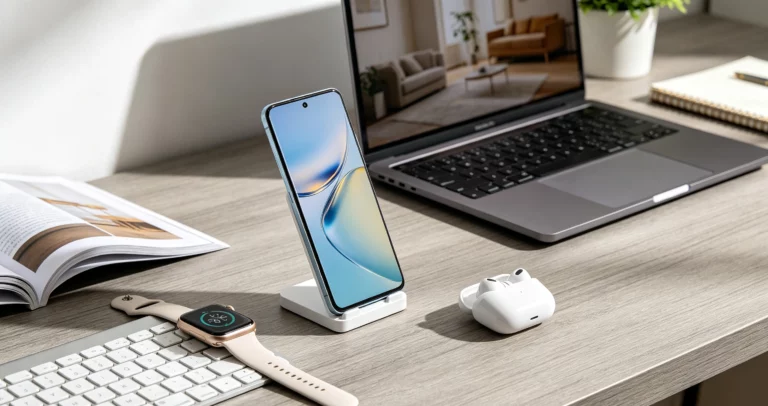
The design of smartphones has been quite constant over the past few years, with touch screens, front and rear cameras, and a one-body design. Nevertheless, as multi-screen smartphones have become more advanced, yet another idea has gained traction: how different the iPhone would become with an expanded display.
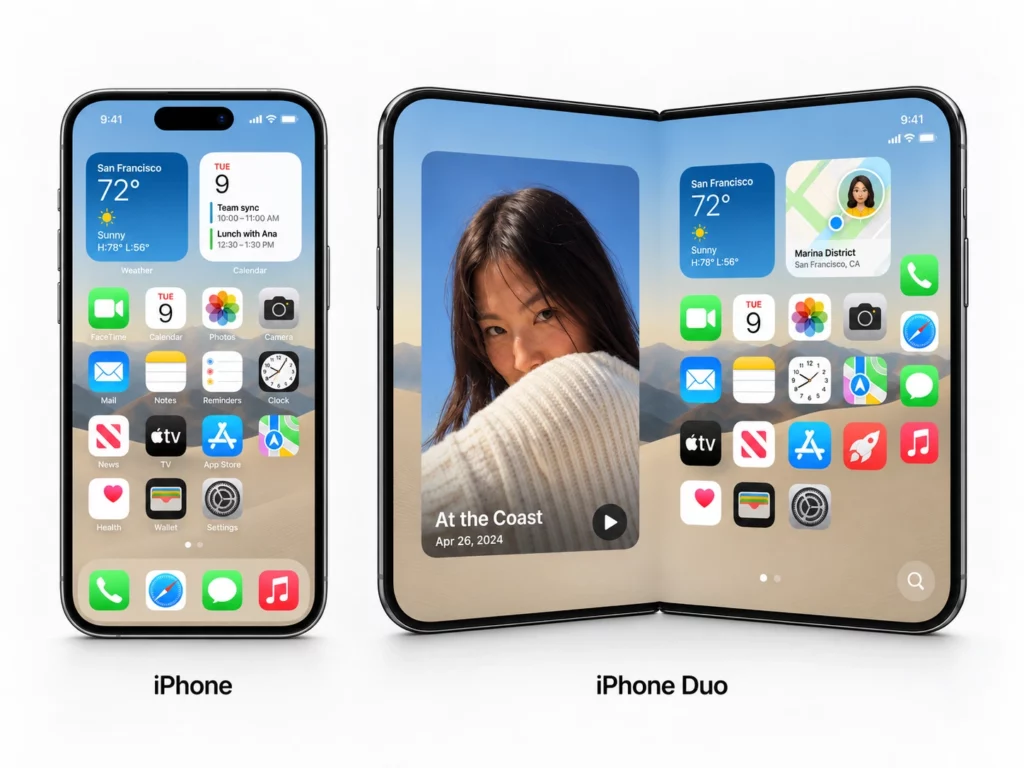
This is what the comparison between iPhone Duo and the regular iPhone is all about. While iPhone Duo would refer to a double-screen or an expanded-display iPhone, its main difference from the ordinary iPhone may not necessarily lie in its additional display.
Nevertheless, there are certain strengths of the regular iPhone, including maturity, portability, and software support.
1. iPhone Duo vs. Regular iPhone: What Are the Main Differences?
The most apparent distinction might be the actual design itself, but more important than that is how the design influences usability.
Display Design Could Be the Biggest Change
An ordinary iPhone comes with the familiar interface of a single screen, which optimally manages screen space, usability, and portability.
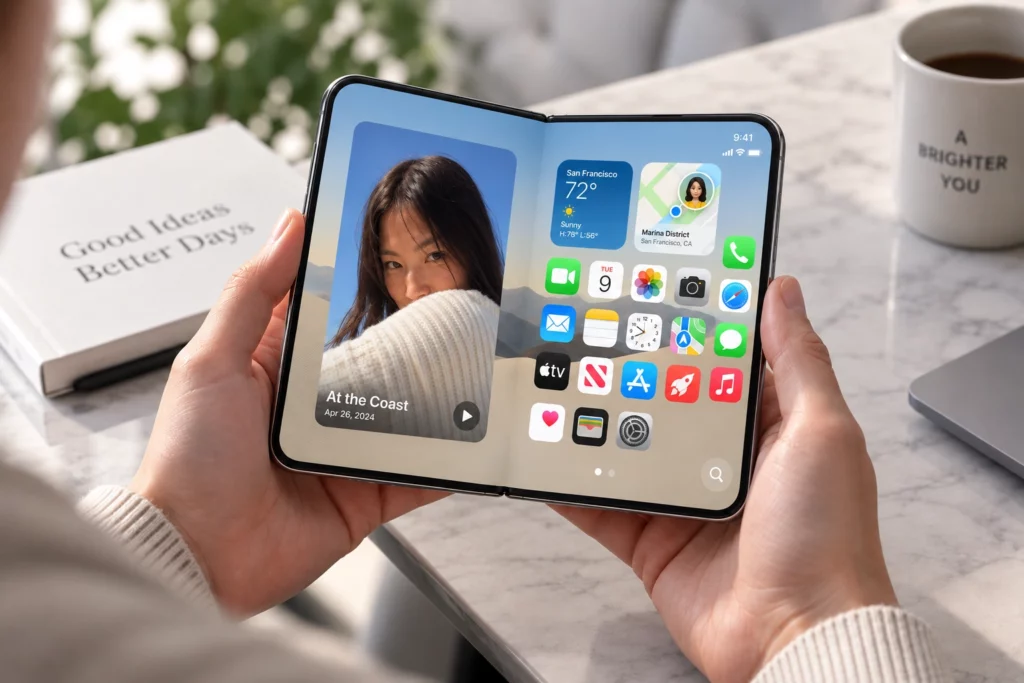
If the iPhone Duo comes with two screens or expandable screens, there can be much more usable screen space. Rather than one application filling the screen, people will be able to multitask using two screens.
One can do the following:
• Read an email while checking on the calendar
• Watch a movie while making notes
• Check Maps while reading messages
• Read a document while researching information about it
The main benefit of the Duo interface will not lie in the presence of “two screens” for its own sake.
iPhone Duo Could Focus More on Multitasking
The standard user interface of an iPhone works perfectly fine for photography, social networking, mapping, payment processes, video watching, and many other actions people use their phones for. But one screen gives little space to work with if you have to do something else while performing any task.
While a bigger or expandable working space could help in multitasking, it would put more pressure on the operating system.
Applications will need to fit different areas of display and various screens. The OS will also need to take care of window placement, interaction across displays, and transition between open and closed states.
This is why software optimization may be as important as hardware itself. An extra screen is useless if applications cannot make good use of it.
A Larger Display Could Affect Portability and Battery Life
A larger screen size does not always mean a better smartphone.
With respect to dual-screen or folding smartphones, having additional components such as a hinge and a screen itself would result in increased thickness, weight, and other physical aspects. All of these might be critical for people who often use their phones with only one hand.
There is the issue of battery life, where the total display size might require more energy; however, extra screens do not have to use as much energy as is proportional to the size of the screen.
The performance of the iPhone Duo’s battery would depend on many factors, including display brightness, refresh rate, CPU efficiency, battery capacity, network conditions, and software optimization.
Therefore, the battery performance of the iPhone Duo can only be assessed once the actual hardware becomes available for testing.
2. iPhone Duo vs. Regular iPhone: Which Is Better for Everyday Use?
Usability does not depend on the number of functions your mobile device has. What matters is whether these functions address the user’s issues.
Regular iPhone Prioritizes Portability and Familiarity
These operations need not always involve the use of two screens.
The conventional iPhone has the advantage of a tried-and-tested ecosystem of applications and accessories, as well as intuitive controls that most users are familiar with, and that software designers cater to when designing their applications.
This is an asset for those who prefer simplicity and convenience.
One-handed operation of the phone is also more relevant to such users than additional screen space.
Such people will be more interested in the size and thickness of the phone.
iPhone Duo Could Appeal to Frequent Multitaskers
If the iPhone Duo incorporates an expandable or dual-screen interface, it would prove to be more practical for individuals who switch between multiple applications quite frequently.
A business individual may wish to see their email and a calendar side by side. A student may wish to take notes while referring to certain study material. A writer may find it more useful to view media on one side while doing some text manipulation on another.
In all these cases, the added screen real estate would not help them see the content bigger. Their primary aim here would be to eliminate the need to switch between apps.
How much productivity can be improved through this approach would very much depend on iOS support and developer adoption.
Durability and Long-Term Costs Also Matter
A more complex form factor can bring about some extra factors for consideration.
Smartphones have traditionally been made to be rather rigid, but with smartphones that can fold or come with two screens, there is going to be the inclusion of moving parts. Therefore, apart from just the processor and cameras, buyers will need to think about:
• The longevity of the screen
• The robustness of the hinge mechanism
• Water and dust protection
• Cost of repairs
And many other issues.
The Better Choice Depends on How You Use Your Phone
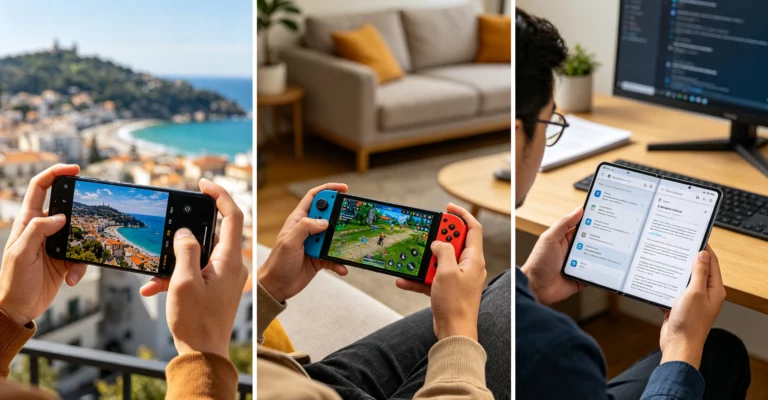
Where photography, messaging, navigation, and entertainment are concerned, the normal iPhone has a well-established experience.
For those people who are always dealing with documents, emails, applications, and content creation, the expanded workspace that the iPhone Duo concept represents would be an alternative advantage.
The important thing to ask yourself is not how many more screens one phone has than the other, but whether the added screen space adds any value to you.
Conclusion
The essential distinction between the iPhone Duo and an ordinary iPhone will probably boil down to their usage. The traditional iPhone stresses the importance of mobility, a well-established software platform, and an already known single-screen experience; the iPhone Duo idea may concentrate more on an extended screen size and multitasking.
If you need to communicate, take photos, and entertain yourself, the traditional iPhone is your choice. If multitasking and extra workspace is what you want to have, the iPhone Duo can be considered as another alternative.
0