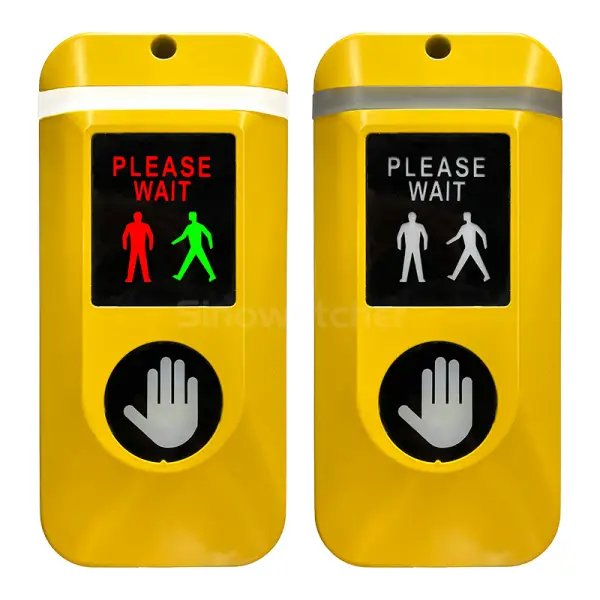
Traffic lights are crucial elements of contemporary road infrastructure. They manage the movement of cars, allocate the right-of-way at intersections, and make various traffic flows move through the shared road space. Although the standard red, yellow, and green lights are almost identical at any intersection, the control systems that are used behind them might differ significantly. The Vehicle Traffic Signal might work under fixed cycle, vehicle detection, coordination with adjacent intersections, or adaptive time control.
Knowledge about types of traffic controls is critical when developing traffic infrastructure since the actual traffic volume, layout of intersections, pedestrians’ activity, and overall road network might differ a lot. The proper system must correspond to the real situation and not use the same control type everywhere.
1. What Is a Vehicle Traffic Signal?
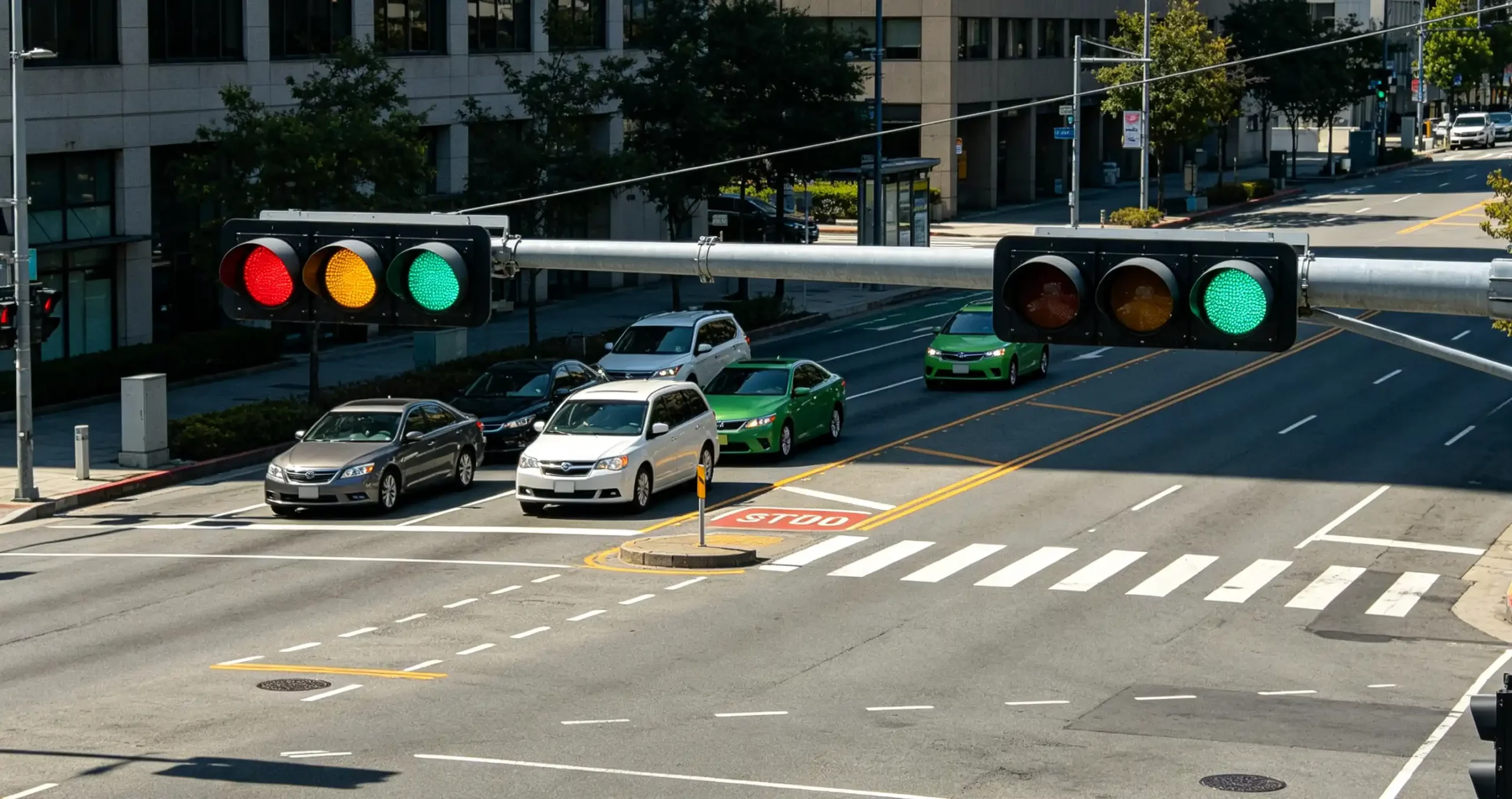
The Vehicle Traffic Signal is the electronic traffic-control system that is designed to control the movement of vehicles at intersections and some other controlled points on the road. It includes the signal displays, controllers, detection devices, and the time control settings that define when different movements get the green, yellow, and red light.
Modern systems can also interact with vehicle detectors and communication networks. Depending on the installation type, detectors may detect vehicles approaching the stop line, measure the traffic volume, or provide information to a traffic management control center. This allows the system to react according to traffic demand and not operate only based on a predefined timing plan.
How Vehicle Traffic Signals Control Road Movements
A Vehicle Traffic Signal creates different traffic phases and controls which right-of-way movement has priority. For instance, one phase allows vehicles to pass through the intersection, while another gives priority to a protected left turn. Yellow and all-red phases provide clearance time between conflicting movements.
The timing of signals is not limited to vehicle flow only. Pedestrians, cyclists, buses, police cars, ambulances, and trucks also have to be considered when managing an intersection. That is why the cycle length and green-time allocation should be adjusted for the particular needs of the location.
What Are the Main Types of Vehicle Traffic Signals?
Different signal systems are mainly distinguished by how they determine signal timing. The timing can be predetermined, vehicle-actuated, or based on the overall traffic conditions. Four types described below are common control strategies used in traffic management.
Fixed-Time Vehicle Traffic Signals
Fixed-Time Vehicle Traffic Signals work based on pre-timed plans. The controller follows the preset cycle lengths, green splits, and clearance times instead of altering each phase based on actual vehicle detection.
Such a scheme would work well for intersections where traffic is predictable and stable enough. For instance, in a busy corridor within an urban area, traffic volume would be almost the same in morning and evening peak hours. If the cycle is 120 seconds, available green time could be allocated to different traffic streams depending on the preset traffic pattern. Fixed-time control can also simplify system operation because it does not require vehicle detection for basic timing.
Actuated Vehicle Traffic Signals
An actuated vehicle traffic signal utilizes vehicle detection to control its operation. Detectors could be placed close to stop lines, turn lanes, or even upstream of the intersection to detect approaching vehicles. The controller then adjusts the amount of green time assigned to a movement according to detected demand. Actuated control can be semi-actuated or fully actuated, depending on which approaches have detection.
This method can be useful where traffic demand changes significantly throughout the day. If a side road has no vehicles waiting, the controller does not necessarily need to provide the same amount of green time as it would during a busy period. In lighter traffic conditions, this can reduce unnecessary waiting and make better use of available intersection capacity.
Coordinated Vehicle Traffic Signals
A coordinated Vehicle Traffic Signal works with other signals along a road or corridor rather than operating entirely on its own. Timing plans can use cycle length, green splits, and offsets to help traffic progress through multiple intersections. When coordination is applied properly, a series of vehicles will pass through a succession of signals without unnecessary stops; traffic engineers refer to such a flow as a green band.
The application of coordination becomes especially effective if there are a few signals positioned relatively close to each other. For instance, if there are several intersections separated by several hundred meters, their signals should be coordinated so that the movement remains smooth. Coordination can also be used in combination with an actuated type of control when some movements are demand-responsive, but the cycle for a main street is coordinated.
Adaptive Traffic Signal Systems
Adaptive Traffic Signal Systems use real-time traffic information to adjust signal timing according to changing vehicle demand. However, flexible signal control also requires traffic signal hardware that can provide clear and reliable indications in different road environments. For road authorities and smart traffic projects, maintaining high visibility, stable operation, and durable outdoor performance can be challenging.
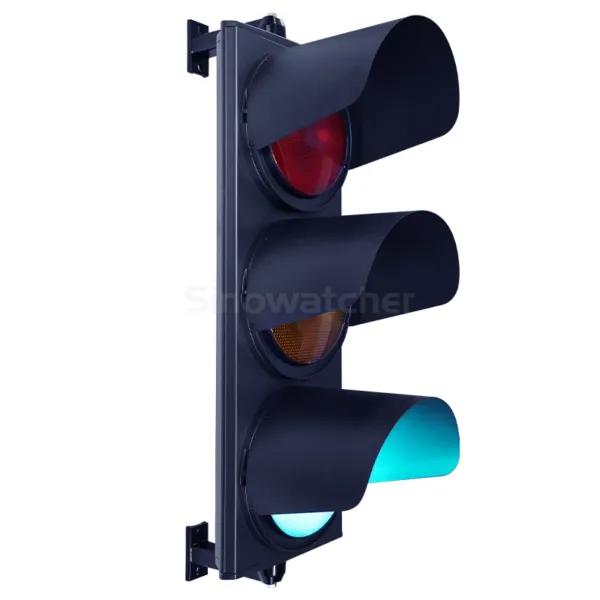
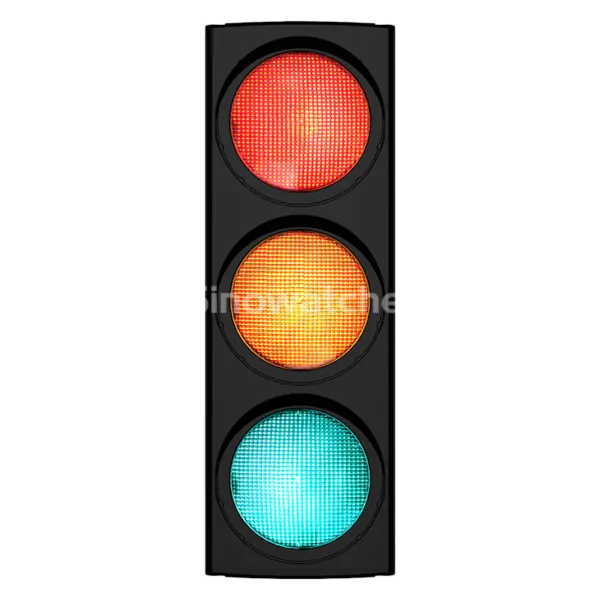
Adaptive Traffic Signal Systems can use LED traffic signal hardware such as Sinowatcher’s 300mm Aluminum LED Traffic Signal. For projects that demand good visibility of signals and reliable operation in the outdoor environment, this device can become a good solution. The device incorporates an SMD LED light source, a 300 mm signal diameter, IP65 protection, and a viewing distance of at least 300 m. In addition, the device has a durable aluminum housing and a front-opening modular design.
| Signal Type | Timing Method | Typical Application |
| Fixed-time | Predetermined schedules | Predictable traffic patterns |
| Actuated | Vehicle detection | Variable intersection demand |
| Coordinated | Linked timing plans | Multi-intersection corridors |
| Adaptive | Real-time traffic data | Changing or unpredictable traffic |
Conclusion
The main types of Vehicle Traffic Signal systems differ primarily in how they determine and adjust signal timing. Fixed-time systems depend on preplanned timings; actuated systems are based on the presence of vehicles; coordinated systems coordinate several intersections; and adaptive systems depend on the current traffic conditions to make changes.
Selection of a proper vehicle traffic signal system depends on factors such as the number of vehicles, distance between intersections, the type of roads, detection methods, pedestrian movement, and future traffic needs. Designing traffic signals with real traffic situations in mind would make for efficient traffic control and smooth vehicle flow. For more information about traffic signal systems, feel free to contact Sinowatcher.
0


.webp)