In modern manufacturing, the packaging production line plays a crucial role in improving efficiency, ensuring product consistency, and reducing labor costs. As industries continue to evolve, different types of packaging systems have been developed to meet specific production needs across food, pharmaceuticals, cosmetics, and industrial sectors. Understanding the various types of packaging production lines available in the market can help businesses choose the most suitable solution based on their production scale, product characteristics, and budget. In this article, I will introduce the main categories of packaging production lines and explain their features in detail.
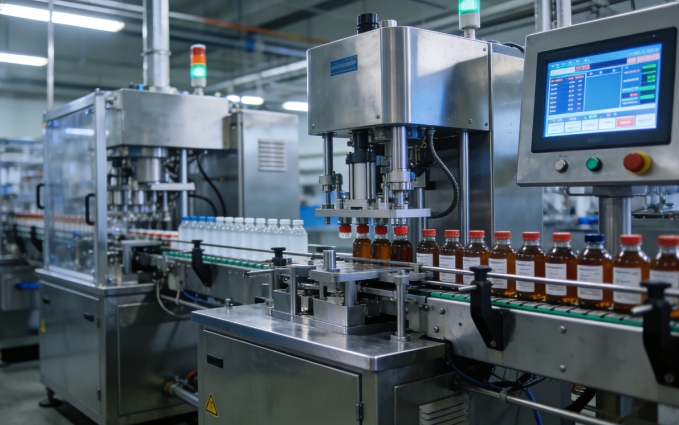
Manual Packaging Production Line
A manual packaging production line relies heavily on human labor to complete most packaging tasks. Although it is the simplest form, it still holds value in certain scenarios.
- First, it is widely used in small-scale production environments where investment budgets are limited, and production volume is relatively low.
- Second, operators manually perform tasks such as filling, sealing, labeling, and inspection, which allows greater flexibility when handling different product types.
- Third, it is easy to set up and maintain since it does not require complex machinery or advanced technical training.
- However, the efficiency is relatively low, and the consistency of output may depend on the skill level of workers.
This type of packaging production line is suitable for startups or businesses that require customization and low-volume production.
Semi-Automatic Packaging Production Line
The semi-automatic packaging production line combines manual operation with mechanical equipment, offering a balance between efficiency and cost.
- One key advantage is that it reduces the reliance on manual labor while still allowing human intervention when necessary.
- Secondly, machines are used for repetitive processes such as filling or sealing, while workers handle product feeding or final inspection.
- Thirdly, it improves productivity compared to fully manual systems while keeping investment costs relatively moderate.
- Additionally, it provides flexibility for different product sizes and packaging formats, making it suitable for medium-scale production.
This type of packaging production line is ideal for companies looking to upgrade from manual systems without making a large financial investment.
Fully Automatic Packaging Production Line
A fully automatic packaging production line is designed for high-efficiency, large-scale production with minimal human involvement.
- One of the most important features is its high level of automation, where processes such as filling, sealing, labeling, and conveying are all integrated.
- It significantly improves production speed and ensures consistent product quality across batches.
- Another advantage is reduced labor costs, as fewer operators are needed to monitor and manage the system.
- It also enhances accuracy and reduces human errors, which is especially important in industries like food and pharmaceuticals.
This packaging production line is best suited for large manufacturers with high output requirements and strict quality standards.
Customized Packaging Production Line
A customized packaging production line is tailored to meet specific industry or product requirements, offering maximum flexibility.
- First, it can be designed based on product characteristics such as size, shape, viscosity, or fragility.
- Second, it allows integration of specialized equipment, such as filling machines, labeling systems, or inspection units, depending on production needs.
- Third, customization enables better compatibility with existing production systems, improving overall workflow efficiency.
- Finally, it supports scalability, allowing businesses to expand or modify their production line as demand grows.
This type of packaging production line is widely used in industries with unique production requirements, such as cosmetics, chemicals, and pharmaceuticals.
Smart Packaging Production Line with Advanced Technology
With the advancement of Industry 4.0, smart packaging production lines are becoming increasingly popular due to their intelligent features and data-driven capabilities.
- One major feature is the integration of sensors and IoT technology, which allows real-time monitoring of machine performance and production data.
- It also enables predictive maintenance, helping reduce downtime and improve equipment lifespan.
- In addition, smart systems can automatically adjust settings based on product specifications, improving flexibility and precision.
- Moreover, data collection and analysis help businesses optimize production efficiency and make informed decisions.
This advanced packaging production line is suitable for companies aiming to enhance automation and digital transformation.
Conclusion
In summary, there are several types of packaging production lines available in the market, including manual, semi-automatic, fully automatic, customized, and smart systems. Each type of packaging production line offers unique advantages depending on production scale, budget, and industry requirements. By carefully evaluating your business needs and long-term goals, you can select the most suitable packaging production line to improve efficiency, reduce costs, and enhance product quality.
0