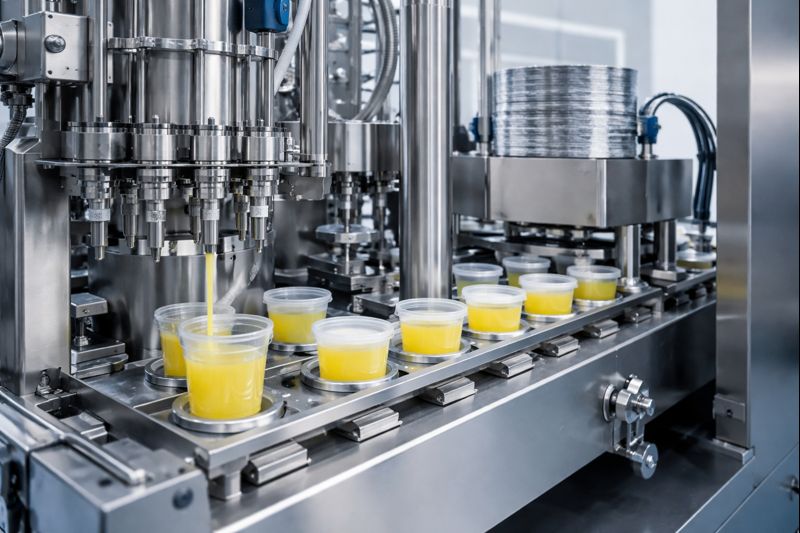
A filling sealing machine is an automated packaging device that integrates precise filling and sealing functions into a single system. It is designed to accurately dispense various types of products into containers and seal them within the same production process. A typical filling sealing machine consists of a filling system, a sealing system, a control system, and a conveying system, enabling stable and continuous operation. Due to its high level of automation, the filling sealing machine is widely used in industries such as food and beverage, pharmaceuticals, cosmetics, and chemicals, covering almost all sectors that require standardized packaging.
How Does a Filling Sealing Machine Work?
A standard filling sealing machine operates through the following steps, all coordinated by an automated control system to ensure stable and reliable performance:
- Container feeding: Empty bottles, cups, pouches, or boxes are automatically conveyed to designated positions. Positioning mechanisms ensure containers remain stable during filling and sealing, preventing misalignment or tipping.
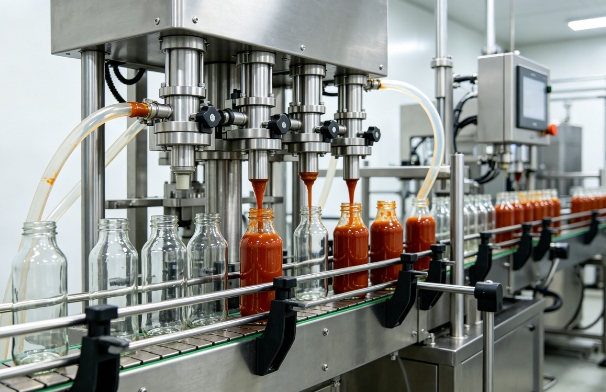
- Precise filling: Based on product characteristics, suitable filling methods are selected. Piston filling is commonly used for viscous products, while peristaltic pumps are preferred for applications requiring high hygiene standards. Gravity filling is suitable for low-viscosity liquids. Advanced control systems ensure consistent and accurate fill volumes while minimizing product waste.
- Sealing process: After filling, containers immediately proceed to sealing. Depending on the packaging type, sealing methods may include heat sealing films, aluminum foil sealing, ultrasonic sealing, or screw capping. High-quality sealing enhances leak prevention and improves the overall appearance of the final product.
- Finished product discharge: Sealed products are conveyed to subsequent processes such as labeling, coding, cartoning, or inspection. Smooth and efficient discharge allows seamless integration with downstream production lines.
This highly automated process ensures both filling accuracy and sealing consistency, making the filling sealing machine a core component of modern packaging automation.
Main Types of Filling Sealing Machines
Depending on application requirements and packaging formats, filling sealing machines can be categorized into several types, each designed for specific production needs:
- Automatic Filling Sealing Machine
An automatic filling sealing machine is ideal for large-scale, continuous production. It offers high operating speed and excellent stability and can be integrated with automatic bottle unscramblers, labeling machines, and cartoning systems. This type is commonly used in food and beverage manufacturing, where high output is required.
- Semi-Automatic Filling Sealing Machine
A semi-automatic filling sealing machine is suitable for small and medium-sized businesses or early-stage production. It typically requires some manual assistance while still ensuring reliable filling accuracy and sealing quality. With a simpler structure and lower investment cost, it offers excellent cost performance.
- Liquid Filling Sealing Machine
A liquid filling sealing machine is designed for products such as water, juice, milk, and alcohol. These machines often feature anti-drip nozzles and precise flow control systems to ensure clean filling, stable operation, and consistent volumes without spillage.
- Paste Filling Sealing Machine
A paste filling sealing machine is used for high-viscosity products such as sauces, shampoos, lotions, and cosmetic creams. Piston filling systems are commonly employed to maintain accuracy while handling thick or particulate-containing materials.
- Cup/Pouch Filling Sealing Machine
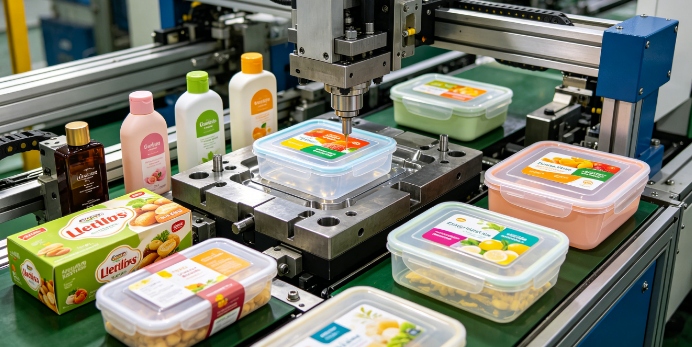
Cup or pouch filling sealing machines are widely used for yogurt, jelly, sauces, and ready-to-eat food products. These machines often integrate forming, filling, and sealing functions, completing the entire packaging process within a compact footprint, making them ideal for food processing applications.
Application Industries of Filling Sealing Machines
The filling sealing machine is widely used across multiple industries due to its versatility and reliability:
- Food and beverage industry: Used for filling and sealing juices, yogurt, sauces, and condiments while ensuring food safety, hygiene, and regulatory compliance.
- Pharmaceutical industry: Suitable for oral liquids, ointments, and reagents, where high filling accuracy and strict cleanliness standards are required.
- Cosmetics industry: Applied to lotions, serums, and creams, with a focus on packaging consistency, aesthetics, and leak prevention.
- Chemical industry: Commonly used for lubricants, detergents, and disinfectants, requiring machines with strong corrosion resistance.
Advantages of Using a Filling Sealing Machine
Choosing the right filling sealing machine provides significant benefits that directly impact productivity and product quality:
- Improved production efficiency: Automated operation shortens production cycles and enables continuous, stable output to meet large-volume orders.
- Accurate filling performance: Precision dosing systems reduce filling errors and material waste, helping control production costs.
- Consistent packaging quality: Uniform fill levels and sealing results create standardized packaging and enhance brand image.
- Compliance with hygiene standards: Machines can be manufactured with food-grade or pharmaceutical-grade stainless steel to meet strict hygiene regulations.
How to Choose the Right Filling Sealing Machine?
When selecting a filling sealing machine, the following factors should be carefully evaluated to ensure optimal performance and return on investment:
- Material type: Liquid, paste, or powder products require different filling mechanisms and structural designs.
- Packaging container format: Bottles, cups, or pouches must be compatible with the machine’s size range, materials, and sealing methods.
- Production speed and capacity requirements: Equipment should match current output needs while allowing room for future expansion.
- Level of automation: The degree of automation affects production efficiency, labor input, and system integration capability.
- Machine materials and hygiene standards: Especially critical for food and pharmaceutical applications, where cleanliness and easy maintenance are essential.
Conclusion
The filling sealing machine is a key piece of equipment in modern packaging, improving production efficiency by automating filling and sealing processes while ensuring consistent product quality. It supports standardized, hygienic packaging, making it essential in industries such as food, pharmaceuticals, and cosmetics. As technology advances, filling sealing machines are becoming more versatile and play an increasingly important role in meeting the demand for high-quality packaged products.
0