Brands are constantly seeking technologies that improve product quality, production efficiency, and visual appeal at the same time. One of the most effective solutions is in mold labeling, a process where pre-printed labels are placed inside the mold and fused with the plastic product during injection molding. This method integrates decoration and forming into a single step, creating a seamless and durable finish. Compared with traditional post-molding labeling, in mold labeling offers multiple advantages that make it highly suitable for food packaging, household goods, cosmetics, and industrial plastic products.
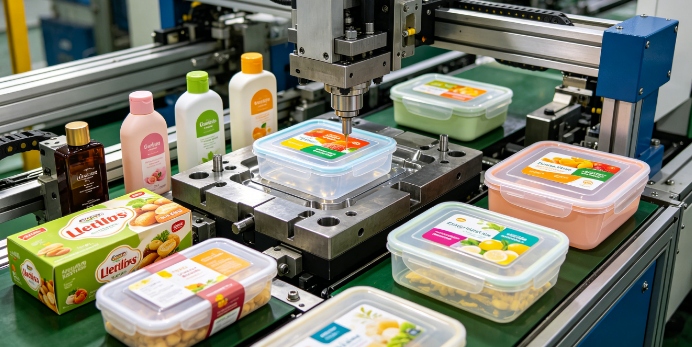
1. Superior Product Durability and Long-Lasting Labeling
One of the key advantages of in mold labeling is its ability to significantly improve product durability and label performance.
- The label becomes part of the plastic surface, rather than sitting on top of it, preventing peeling or lifting over time.
- It offers strong resistance to scratches caused by friction during transportation, storage, and daily use.
- Moisture, oil, and chemical exposure have minimal impact on the label’s appearance and readability.
- The integrated structure ensures that branding and product information remain clear throughout the product lifecycle.
This durability makes it ideal for products that require long-term visual consistency and reliability.
2. Enhanced Visual Quality and Branding Impact
Another major benefit of in mold labeling is the significant improvement in product appearance and brand presentation.
- High-resolution printing allows for detailed graphics, vibrant colors, and complex designs that attract consumer attention.
- The seamless integration eliminates edges, bubbles, or wrinkles commonly seen in traditional labeling methods.
- Surface finishes such as matte, glossy, or textured effects can be customized to match brand identity.
- Full-surface decoration enables 360-degree branding, maximizing visibility on retail shelves.
These visual advantages help companies strengthen brand recognition and improve product competitiveness.
3. Improved Production Efficiency and Cost Reduction
From a manufacturing perspective, in mold labeling provides significant efficiency improvements and cost savings.
- Labeling and molding occur simultaneously, reducing the need for separate post-processing steps.
- Automation minimizes manual labor requirements, lowering labor costs and human error rates.
- Faster production cycles increase output and improve factory utilization rates.
- Reduced defective rates decrease waste and rework expenses, improving overall cost efficiency.
This streamlined production process makes it highly suitable for large-scale manufacturing environments.
4. Environmental Benefits and Sustainable Manufacturing
Sustainability is another important advantage of in mold labeling, especially in industries focusing on eco-friendly production.
- The process eliminates the need for adhesives, reducing chemical usage and environmental pollution.
- Many label and base materials are recyclable, supporting circular economy practices.
- Fewer production steps mean lower energy consumption during manufacturing.
- Reduced waste generation contributes to more efficient and environmentally responsible production systems.
These benefits align with global trends toward greener and more sustainable packaging solutions.
5. Strong Versatility Across Different Plastic Applications
The flexibility of in mold labeling makes it suitable for a wide range of plastic products across various industries.
- Food containers such as yogurt cups and ice cream tubs benefit from moisture-resistant labeling.
- Household storage boxes and cleaning product bottles require durable and scratch-resistant surfaces.
- Cosmetic packaging demands high-end visual appeal and chemical resistance.
- Industrial containers need strong identification labels that remain readable under harsh conditions.
This versatility ensures that IML can meet diverse functional and aesthetic requirements.
Conclusion
In conclusion, in mold labeling offers multiple advantages for plastic products, including superior durability, enhanced visual quality, improved production efficiency, environmental benefits, and strong application versatility. By integrating labeling directly into the molding process, manufacturers can achieve both cost-effective production and high-end product presentation. As demand for efficient and sustainable packaging continues to grow, in mold labeling will remain a key technology in the advancement of modern plastic manufacturing.
0