As global data usage continues to rise, energy efficiency has become a major concern for modern network infrastructure. Data centers, telecom operators, and enterprise IT systems are all under pressure to reduce power consumption while maintaining high-speed, reliable connectivity. Traditional copper-based networks often consume more energy due to signal amplification and heat generation. In contrast, fiber optic technology offers a more efficient alternative that supports high-performance communication with lower energy requirements. In many large-scale deployments, procurement strategies such as wholesale fiber optic cable sourcing are also used to optimize both cost and energy-efficient network design.

Lower Power Requirements in Data Transmission
One of the main ways fiber optic cable helps reduce energy consumption is through its inherently low power requirements during data transmission.
- Fiber optic systems transmit data using light signals instead of electrical currents, significantly reducing the energy needed to move information across the network.
- Unlike copper systems, fiber does not require frequent electrical signal boosting over long distances, which reduces the need for power-hungry repeaters.
- Efficient infrastructure planning, often supported by wholesale fiber optic cable supply solutions, ensures that large-scale networks can operate with fewer energy-intensive components.
This fundamental difference in transmission method makes fiber optics far more energy-efficient from the ground up.
Reduced Heat Generation and Cooling Demand
Another major contributor to energy savings in network systems is the reduction of heat generation, which directly impacts cooling requirements.
- Fiber optic cables generate minimal heat during operation because they do not rely on electrical resistance, unlike copper wiring systems.
- Lower heat output reduces the workload on cooling systems in data centers, leading to significant energy savings in HVAC operations.
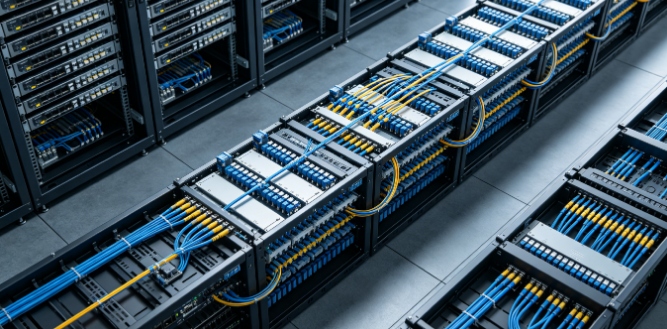
- Efficient cable layouts, especially in large installations supported by wholesale fiber optic cable procurement, help maintain optimal airflow and further reduce cooling costs.
By minimizing thermal output, fiber optic networks indirectly lower overall facility energy consumption.
Improved Transmission Efficiency and Signal Integrity
Energy efficiency is also closely tied to how effectively a network transmits data without requiring retransmission or correction.
- Fiber optic cables maintain high signal integrity over long distances, reducing the need for repeated data transmission caused by signal degradation.
- Optical signals are less prone to interference, meaning fewer resources are needed for error correction and signal stabilization.
- High-efficiency network designs ensure that systems built with wholesale fiber optic cable components can operate with fewer active processing resources.
This improved efficiency means less computational load and lower overall power usage across the network.
Lower Maintenance and Operational Energy Costs
Beyond transmission, fiber optic systems also contribute to reduced energy consumption through simplified maintenance and operational efficiency.
- Fiber networks require fewer active electronic components, which reduces the continuous power draw of supporting equipment.
- Reduced failure rates mean less frequent maintenance activities, which in turn lowers the energy required for diagnostics and repairs.
- Streamlined infrastructure design allows operators to optimize system performance while minimizing unnecessary energy expenditure.
These operational advantages make fiber optics a more sustainable long-term solution for large-scale networks.
Scalability Without Proportional Energy Increase
One of the most important advantages of fiber optic systems is their ability to scale without significantly increasing energy consumption.
- Fiber infrastructure can support massive increases in data traffic without requiring proportional increases in power usage.
- Advanced multiplexing techniques allow multiple data streams to travel through a single fiber, improving efficiency without additional energy cost.
- Scalable deployments, often planned using wholesale fiber optic cable resources, enable organizations to expand networks while maintaining stable energy usage levels.
This makes fiber optics especially valuable for rapidly growing digital environments such as cloud computing and global communication systems.
Conclusion
Fiber optic cable plays a significant role in reducing energy consumption in modern network systems. Through low-power transmission, reduced heat generation, improved signal efficiency, lower maintenance demands, and scalable architecture, fiber technology offers a highly energy-efficient alternative to traditional copper-based networks. As global demand for data continues to increase, adopting fiber-based infrastructure will be essential for building sustainable, high-performance, and energy-conscious communication systems.
0