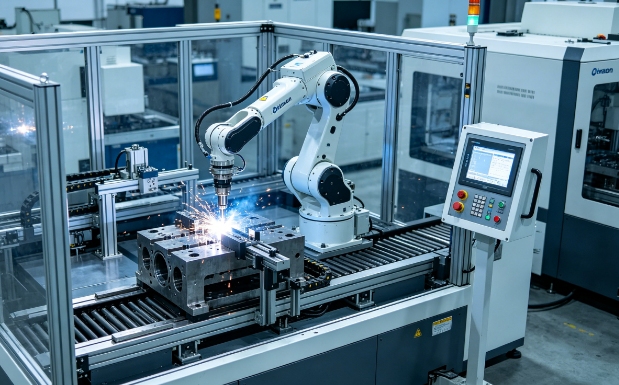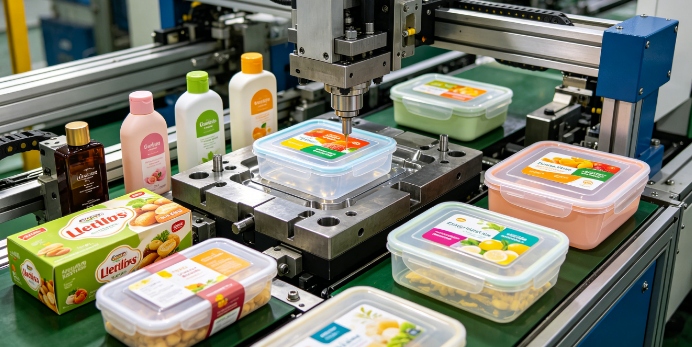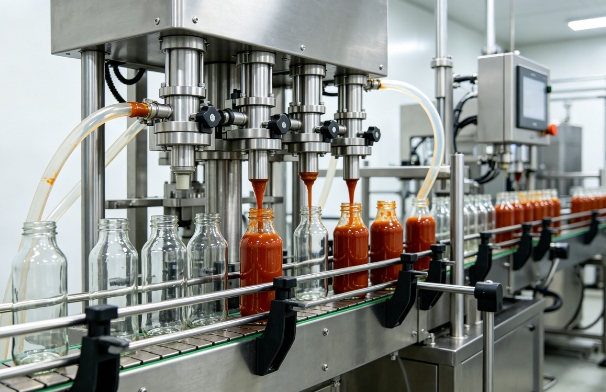
Selecting the right motion control system for industrial applications is a critical decision that directly affects production efficiency, machine accuracy, and long-term operational stability. In modern automation environments such as manufacturing, robotics, packaging, and CNC machining, precise motion control is essential for ensuring consistent product quality and reducing production errors. With a wide range of technologies and configurations available today, businesses must carefully evaluate system performance, compatibility, and scalability before investing. A well-chosen solution can significantly improve productivity while reducing maintenance costs and downtime in industrial operations.
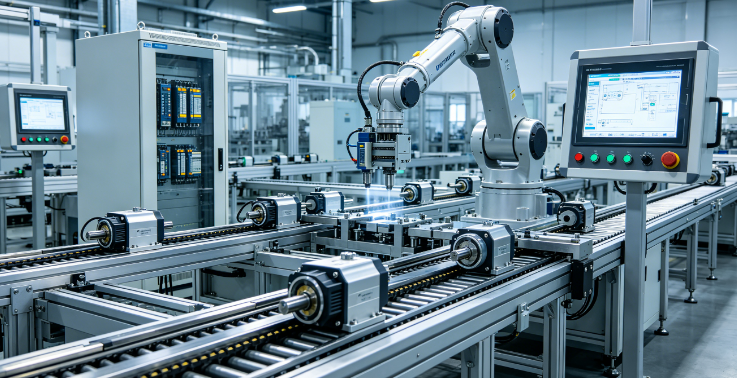
Understand Application Requirements and Industry Needs
Before selecting a motion control system, it is important to clearly define the application requirements and operational environment:
- Identify movement precision and speed requirements
Different industries require different levels of accuracy. For example, semiconductor production demands micron-level precision, while packaging lines prioritize high-speed movement with moderate accuracy. Understanding these needs helps determine system specifications. - Evaluate load capacity and mechanical demands
The system must support the weight, torque, and mechanical stress of the application. Heavy-duty industrial equipment requires stronger motors and more robust control configurations compared to light automation systems. - Consider working environment conditions
Factors such as temperature, humidity, dust, and vibration can impact system performance. Industrial environments with harsh conditions require more durable and protective designs to ensure stable operation. - Define production goals and output expectations
Clear production targets help determine whether the system should focus on speed, precision, flexibility, or a balance of all three.
Evaluate Core Components of the System
A reliable motion control system depends on the quality and compatibility of its core components:
- Servo motors and drives
These components convert electrical signals into mechanical motion. High-quality servo motors ensure smooth operation, precise positioning, and consistent torque control during industrial tasks. - Controllers and processing units
The controller acts as the central brain, managing motion commands and coordinating multiple axes. Advanced controllers improve synchronization and reduce operational errors in complex automation systems. - Feedback devices, such as encoders
Encoders and sensors provide real-time movement data. This feedback allows continuous correction, ensuring the system maintains high accuracy even during long-term operation. - Mechanical transmission systems
Linear guides, ball screws, and belts are responsible for transferring motion efficiently. Their quality directly affects system stability, smoothness, and overall performance.
Focus on System Performance and Integration Capability
When choosing a motion control system, performance and integration play a key role in long-term success:
- Precision and repeatability performance
A high-quality system should consistently produce identical movements with minimal deviation, ensuring stable production quality across all cycles. - Multi-axis synchronization ability
In advanced industrial applications, multiple motors must work together. Strong synchronization ensures smooth coordination in robotics and automated production lines. - Software compatibility and programming flexibility
Modern systems should support user-friendly software for easy programming, monitoring, and adjustment of motion paths and production parameters. - Integration with existing automation equipment
A good system should easily connect with PLCs, sensors, and industrial networks, allowing seamless integration into existing production lines.
Consider Reliability, Maintenance, and Cost Efficiency
Long-term operational efficiency depends not only on performance but also on maintenance and cost management:
- Durability under continuous operation
Industrial environments require systems that can operate 24/7 without frequent breakdowns. High durability reduces production interruptions. - Ease of maintenance and troubleshooting
Systems with modular designs and clear diagnostics reduce maintenance time and simplify repair processes. - Energy efficiency and operational cost control
Efficient systems consume less energy while maintaining performance, helping reduce long-term operational expenses. - Total cost of ownership evaluation
Instead of focusing only on initial price, businesses should consider long-term costs, including maintenance, downtime, and replacement parts.
Supplier Support and Future Scalability
Working with the right supplier and planning for future growth is essential:
- Technical support and engineering expertise
A reliable supplier provides installation guidance, system optimization, and ongoing technical support to ensure stable operation. - Customization and upgrade options
Industrial needs may change over time, so systems should allow upgrades or modifications without complete replacement. - Spare parts availability and service response
Fast access to spare parts and responsive service support helps minimize downtime during unexpected failures. - Scalability for production expansion
A flexible design ensures the system can grow with business expansion and increased production demands.
Conclusion
In conclusion, selecting the best motion control system for industrial use requires careful evaluation of application requirements, system components, performance capabilities, and long-term operational costs. A well-designed system ensures high precision, stable performance, and efficient automation across various industries such as manufacturing, robotics, and packaging. By considering integration capability, maintenance needs, and supplier support, businesses can achieve reliable production and long-term cost efficiency. Ultimately, investing in the right motion control system is a strategic decision that enhances productivity, improves quality, and supports sustainable industrial growth.
0