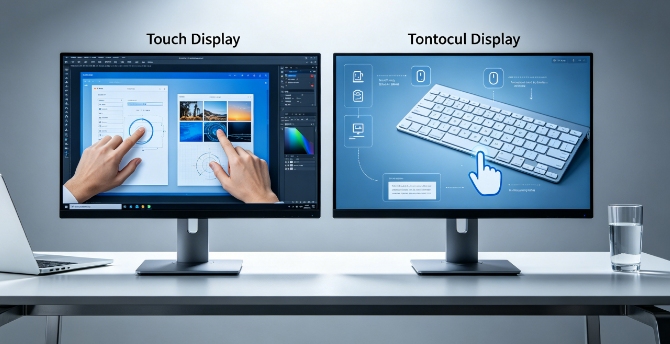
The transflective LCD and TFT LCDs are both widely used in modern electronic devices, but they are designed with different priorities and perform differently depending on the environment. A TFT LCD (Thin Film Transistor LCD) is known for its high color accuracy, fast response time, and strong indoor visual performance. In contrast, a transflective LCD is designed to optimize visibility in both bright outdoor and low-light environments by combining reflective and transmissive technologies. This fundamental difference in design leads to distinct advantages and limitations for each type of display. Understanding how they compare helps manufacturers and users choose the right solution for applications such as industrial equipment, transportation systems, portable devices, and outdoor electronics.
Display Structure and Working Principle Differences
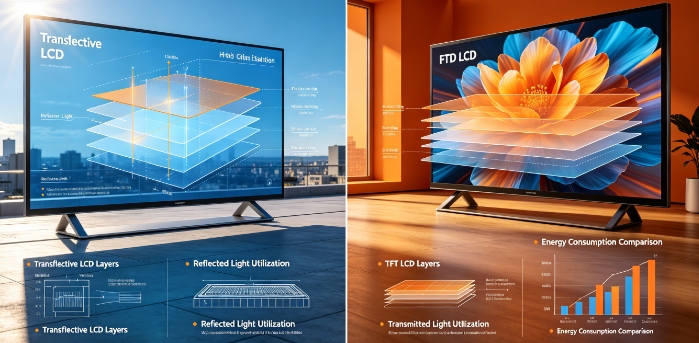
The core difference between a transflective LCD and a TFT LCD lies in how each display handles light.
- TFT LCD structure: Uses a strong backlight and thin-film transistor control to produce sharp images with excellent color reproduction.
- Transflective design approach: Combines a reflective layer with a transmissive backlight system, allowing it to use both ambient light and artificial light sources.
- Light dependency contrast: TFT LCDs rely almost entirely on backlighting, while transflective designs adapt based on surrounding brightness.
- Pixel control similarity: Both technologies use liquid crystal layers, but their light management systems are fundamentally different.
This structural difference directly influences performance in various lighting conditions.
Outdoor Visibility and Sunlight Performance
One of the most noticeable differences between the two display types is their performance under direct sunlight.
Key outdoor comparison points:
- Sunlight readability advantage
A transflective LCD uses ambient light reflection to remain visible outdoors, while TFT LCDs often struggle with glare and washed-out images. - Brightness limitations of TFT displays
Even with increased backlight intensity, TFT screens may still appear less readable in extremely bright environments. - Stable contrast in outdoor use
The reflective mechanism helps maintain clearer contrast levels for outdoor-readable displays. - Viewing comfort in field conditions
Outdoor workers can read information more easily without constantly adjusting screen angles or brightness.
This makes the transflective LCD a stronger option for sunlight-heavy environments compared to standard TFT displays.
Power Consumption and Energy Efficiency
Energy usage is another important factor when comparing these two technologies, especially for portable or battery-powered devices.
- TFT LCD energy demand: Requires continuous backlight operation, leading to higher and more consistent power consumption.
- Adaptive efficiency of transflective design: Reduces backlight usage in bright environments by relying on ambient light.
- Battery life impact: Devices using transflective screens often achieve longer operating times in outdoor use cases.
- Heat generation differences: Lower backlight intensity can also reduce heat output, improving system stability.
In terms of energy efficiency, the transflective LCD generally performs better in outdoor conditions, while TFT LCDs are more stable in controlled indoor environments.
Color Quality, Cost, and Visual Performance
While visibility and efficiency are important, visual quality and cost also play a major role in choosing between these technologies.
- Color richness of TFT LCD: Offers higher color accuracy, better contrast ratios, and more vibrant image reproduction.
- Slight Color Attenuation in Transflective Designs: In certain instances, the reflective layer may slightly reduce color saturation and clarity.
- Production complexity: Transflective structures are more complex to manufacture, which can increase cost.
- Application-based preference: TFT LCDs are preferred for smartphones, TVs, and indoor displays, while transflective types are used in outdoor instruments and industrial devices.
This trade-off shows that neither technology is universally better; instead, each serves different priorities.
Application Scenarios and Industry Usage
The choice between these two displays often depends on the specific industry and usage environment.
- Industrial and outdoor equipment: Transflective LCDs are commonly used in construction machinery, agricultural tools, and monitoring systems.
- Consumer electronics: TFT LCDs dominate smartphones, tablets, laptops, and televisions due to superior visual quality.
- Transportation systems: Both technologies are used, but outdoor dashboards and navigation tools often favor transflective designs.
- Medical and control devices: TFT LCDs are preferred for detailed indoor monitoring where color accuracy is critical.
This shows how each technology is optimized for different real-world requirements rather than competing directly in all areas.
Conclusion
When comparing a transflective LCD with TFT LCDs, the key differences lie in lighting adaptability, power efficiency, and visual performance. Transflective technology excels in outdoor environments by using ambient light to improve visibility and reduce energy consumption, making it ideal for industrial, transportation, and portable field devices. TFT LCDs, on the other hand, deliver superior color quality and are better suited for indoor applications such as consumer electronics and detailed visual work. Ultimately, the choice between the two depends on the intended environment and performance priorities. The transflective LCD is best for brightness-challenging conditions, while the TFT LCD remains the standard for high-quality indoor display experiences.
0