As immersive visual technology continues to evolve, the demand for more natural and engaging display solutions has increased significantly. Among these innovations, the glasses free 3d display stands out as a breakthrough that allows users to experience three-dimensional visuals without wearing special eyewear. However, not all devices offer the same level of performance. High-quality glasses-free 3D display relies on a comprehensive combination of optical precision, hardware capabilities, software optimization, and viewing stability. Understanding its key features is essential for identifying truly professional-grade systems used in advertising, education, entertainment, and industrial visualization.
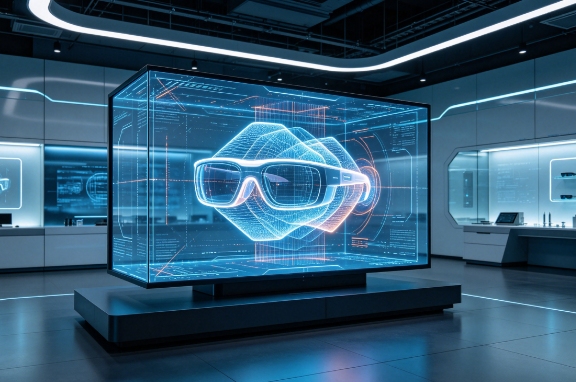
High-Precision Optical Structure and 3D Depth Quality
One of the most important features of a high-quality glasses free 3d display is its optical system, which directly determines how realistic and stable the 3D effect appears.
- Advanced lenticular lens design: High-end models use precisely engineered lens arrays to ensure smooth multi-angle image separation.
- Parallax barrier accuracy: Fine-tuned barrier patterns help deliver consistent depth perception without image distortion.
- Stable multi-view rendering: A quality system supports multiple viewing angles, allowing users to see clear 3D effects from different positions.
- Reduced visual crosstalk: Premium optical layers minimize image overlap between left and right eye views, improving clarity.
These optical technologies ensure that the displayed 3D content feels natural, stable, and visually immersive.
Display Resolution and Image Clarity Performance
A high-quality glasses free 3d display must maintain excellent image clarity even when generating multiple perspectives simultaneously.
- Ultra-high resolution panels:4K or higher resolution is often required to prevent pixel loss when splitting images into multiple views.
- High pixel density optimization: Ensures that fine details remain visible even in complex 3D scenes.
- Color accuracy and wide gamut support: Delivers realistic and vibrant visuals suitable for professional applications.
- Brightness and contrast balance: Maintains visibility in both dark and bright environments without washing out depth effects.
Together, these factors ensure that the 3D experience remains sharp and visually consistent.
Eye Comfort and Viewing Stability Technology
Long-term usability is another essential feature of a high-quality glasses free 3d display, especially in commercial or public environments.
- Eye-tracking integration: Adjusts image positioning based on the viewer’s eye movement for stable 3D perception.
- Wide viewing angle optimization: Allows multiple users to experience 3D content without losing depth quality.
- Flicker-free display technology: Reduces eye fatigue during extended viewing sessions.
These features significantly enhance user comfort and make the display suitable for long-duration usage.
Powerful Hardware and Real-Time Processing Capability
Behind every high-quality glasses free 3d display is a strong hardware system that ensures smooth and responsive performance.
- High-performance GPU integration: Enables real-time rendering of multiple image perspectives.
- Dedicated 3D processing chips: Handle depth mapping and image synchronization efficiently.
- High refresh rate panels: Ensure smooth motion without lag or ghosting effects.
- Low-latency response systems: Reduce delay between content input and visual output.
These hardware components work together to maintain stable and fluid 3D performance under demanding conditions.
Software Optimization and Content Compatibility
Software plays a crucial role in fully unlocking the potential of glasses-free 3D displays.
- 3D content conversion tools:Transform traditional 2D media into multi-view 3D formats.
- Depth rendering algorithms: Enhance spatial accuracy and visual realism in dynamic scenes.
- Cross-platform compatibility: Supports integration with design, education, and entertainment software.
- Real-time adjustment systems: Automatically optimize brightness, contrast, and depth based on content type.
Without advanced software support, even the best hardware cannot deliver optimal 3D performance.
Conclusion
In conclusion, a high-quality glasses free 3d display is defined by its precision optical structure, high-resolution image performance, eye comfort technologies, powerful hardware processing, and advanced software optimization. Each of these features plays a critical role in delivering stable, immersive, and visually accurate 3D experiences without the need for special glasses. While lower-end models may struggle with clarity and viewing stability, premium systems provide a seamless and engaging visual experience suitable for commercial, educational, and entertainment applications. As the technology continues to mature, these key features will remain essential benchmarks for evaluating performance and quality in glasses-free 3D display systems.
0