One of the most important machines in condiment manufacturing is the sauce bottling machine, which is widely used for filling products such as ketchup, mayonnaise, chili sauce, honey, and other viscous liquids. However, many manufacturers often wonder whether a sauce bottling machine can effectively handle thick or sticky liquids without clogging, inaccurate filling, or production delays. The answer largely depends on the machine’s design, filling technology, and configuration. With modern engineering improvements, today’s systems are specifically designed to manage a wide range of viscosities, making them highly suitable for both thin and thick sauce products in industrial production lines.
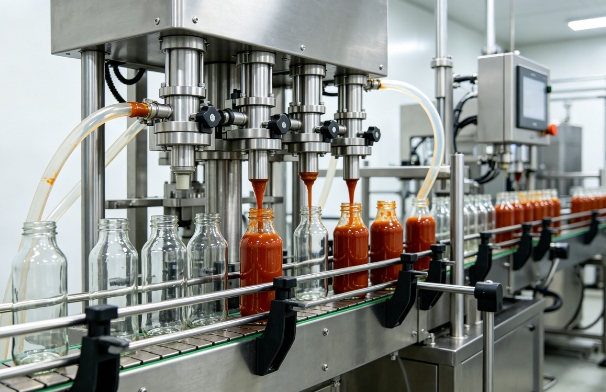
Specialized Pump Systems for High-Viscosity Products
The ability of a sauce bottling machine to handle thick liquids primarily depends on its pumping mechanism, which is designed to ensure smooth and stable material flow.
- Piston pump technology:
This is one of the most commonly used systems for thick sauces. It draws and pushes the product in controlled volumes, ensuring accurate filling even for dense or sticky materials. - Servo-driven control systems:
Advanced machines use servo motors to regulate pressure and speed, allowing precise handling of high-viscosity liquids without overflow or inconsistency. - Rotary valve structure:
Some systems use rotary valves that prevent clogging while maintaining continuous flow, especially useful for chunky or semi-solid sauces. - Anti-drip and back-suction design:
These features prevent residual sauce from dripping after filling, keeping bottles clean and reducing product waste.
Together, these technologies ensure that modern machines can handle even extremely thick sauces efficiently.
Filling Nozzle Design and Anti-Clogging Features
Another key factor in determining whether a sauce bottling machine can handle sticky liquids is the design of its filling nozzles.
- Wide-diameter nozzle openings
Larger openings allow thick sauces with particulates (such as chili seeds or fruit pulp) to pass smoothly without blockage. - Special anti-blocking structure
Nozzles are often designed with smooth internal channels to reduce friction and prevent the accumulation of sticky residues. - Cut-off valve precision control
High-precision valves ensure clean start-stop operation, preventing dripping or stringing effects common with viscous liquids. - Self-cleaning capability
Some advanced systems include automatic cleaning cycles to flush out remaining sauce after production, maintaining hygiene and efficiency.
These nozzle improvements significantly enhance performance when dealing with challenging food textures.
Temperature Control and Material Flow Optimization
Temperature plays an important role in improving the flow characteristics of thick sauces during filling operations.
- Heating jacket systems:
Some sauce bottling machine models include heating functions to slightly warm viscous products, reducing thickness and improving flowability. - Insulated storage tanks:
Maintaining a stable temperature prevents sauces from becoming too thick or separating during processing. - Controlled viscosity adjustment:
Operators can adjust filling conditions based on product consistency, ensuring smooth operation for different recipes. - Continuous mixing systems:
Integrated agitators keep ingredients evenly distributed, preventing settling or uneven filling.
These features help maintain consistent product behavior throughout the bottling process.
Automation, Accuracy, and Production Stability
Modern sauce bottling machine systems are designed for high automation, ensuring stable performance even with challenging materials.
- Precise volume control systems:
Digital controllers ensure every bottle receives the exact amount of sauce, regardless of viscosity changes. - High-speed continuous operation:
Machines are capable of running for long production cycles without a performance drop, even with sticky liquids. - Sensor-based monitoring:
Smart sensors detect flow irregularities and automatically adjust parameters in real time. - Integration with packaging lines:
The machine can work seamlessly with capping, labeling, and conveyor systems for fully automated production.
These capabilities make modern bottling systems reliable for large-scale food manufacturing.
Challenges When Handling Extremely Thick or Chunky Sauces
Although a sauce bottling machine is highly capable, there are still some limitations when dealing with extremely dense or complex products.
- High resistance flow issues:
Very thick sauces may require slower filling speeds to maintain accuracy and prevent blockage. - Particulate size restrictions:
Large chunks in sauces can occasionally cause nozzle obstruction if not properly filtered. - Cleaning complexity:
Sticky residues may require more frequent cleaning cycles to maintain hygiene standards. - Increased energy consumption:
Processing very dense materials may require higher power input, especially in piston-based systems.
Despite these challenges, proper machine selection and configuration can effectively minimize operational issues.
Conclusion
In conclusion, a modern sauce bottling machine is fully capable of handling thick or sticky liquids when equipped with the right pumping systems, nozzle designs, temperature control features, and automation technologies. While extremely viscous or chunky products may present some operational challenges, advanced engineering solutions ensure stable, accurate, and efficient filling performance. As food production continues to evolve toward higher automation and precision, sauce bottling systems are becoming increasingly reliable for a wide variety of product consistencies, making them an essential tool in modern beverage and condiment manufacturing industries.
0