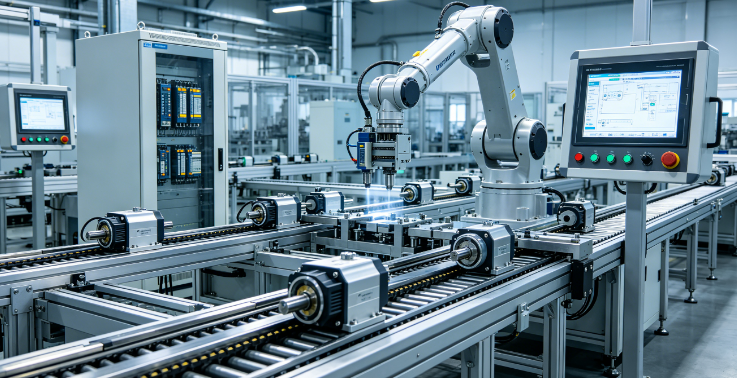
As manufacturing continues to shift toward automation and smart production systems, many small and medium-sized factories are considering whether advanced robotic solutions are worth the investment. Among these technologies, the 5 axis robot arm stands out for its ability to handle complex operations with high precision and flexibility. However, due to concerns about cost, implementation difficulty, and return on investment, many business owners question whether it is truly suitable for smaller-scale production environments. Understanding its benefits and long-term value is essential for making an informed decision.
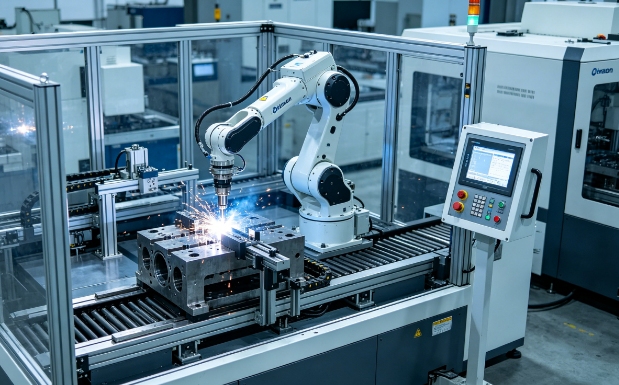
High Initial Investment vs Long-Term Cost Efficiency
One of the primary concerns facing small and medium-sized factories is the upfront investment cost of five-axis robotic arms—a cost that can be significantly higher than that of traditional equipment. However, its long-term financial benefits often offset the initial investment.
- Although purchase and installation costs may be high, the system reduces long-term labor expenses by automating repetitive tasks.
- Improved precision reduces material waste caused by production errors, directly lowering raw material costs over time.
- The robot operates continuously without fatigue, increasing production output without requiring additional shifts or staffing.
- Maintenance costs are generally lower compared to multiple traditional machines performing separate tasks.
For factories with stable production demand, the long-term savings can make the investment financially reasonable.
Improving Production Efficiency in Limited Factory Space
Small and medium factories often face space constraints, making efficient equipment layout extremely important. The 5 axis robot arm helps optimize production flow in compact environments.
- It can perform multiple tasks in a single unit, reducing the need for multiple separate machines.
- Multi-axis movement allows complex operations without frequent repositioning of workpieces, saving valuable floor space.
- Integrated automation reduces the number of production stages, simplifying factory layout and workflow design.
- Faster cycle times help maximize output even in limited production areas.
This makes it especially suitable for factories that need high productivity within restricted physical space.
Enhancing Product Quality and Reducing Defect Rates
Product quality consistency is a critical factor for competitiveness, especially for smaller manufacturers trying to build brand reputation. The 5 axis robot arm significantly improves production accuracy.
- It ensures consistent motion patterns, reducing variations between individual products.
- High-precision control systems allow accurate positioning during machining, assembly, or finishing processes.
- Real-time monitoring helps detect and correct deviations early in the production process.
- Reduced human intervention minimizes errors caused by fatigue or manual inconsistency.
As a result, factories can achieve higher product reliability and fewer rejected batches.
Flexibility for Diverse Production Needs
Small and medium factories often handle multiple product types or frequent production changes. The 5 axis robot arm provides the flexibility needed to adapt quickly to different requirements.
- It can easily switch between tasks such as cutting, welding, assembly, or surface treatment with simple reprogramming.
- Multi-angle movement allows it to process different product shapes without additional fixtures.
- It enables efficient small-batch and customized manufacturing, which is frequently required in medium-scale production environments.
- Software-driven adjustments help minimize downtime during production line changes or product redesigns.
This adaptability makes it highly suitable for businesses with diverse or evolving production demands.
Reducing Dependence on Skilled Labor
Labor shortages and rising wages are common challenges for small and medium-sized factories. A 5 axis robot arm helps reduce reliance on highly skilled manual labor.
- It automates complex and repetitive tasks that normally require experienced technicians.
- Consistent performance reduces the need for continuous operator supervision.
- Workers can be reassigned to higher-value roles such as quality control or system management.
- Training requirements for basic operation are generally lower than manual production skills.
This helps factories maintain stable production even in competitive labor markets.
Conclusion
The 5 axis robot arm can be a worthwhile investment for small and medium factories, depending on production needs and long-term business goals. While the initial cost may be high, its advantages in efficiency, precision, flexibility, and labor reduction often lead to significant long-term benefits. For factories aiming to improve competitiveness, reduce operational costs, and transition toward smarter manufacturing, this advanced automation solution offers strong potential value and sustainable growth opportunities.
0