Both the Smart Ring and Smartwatch are wearable devices intended for tracking your health, sleep, physical activity, and more. Though the first impression of their purposes may be alike, the design of the devices differs drastically.
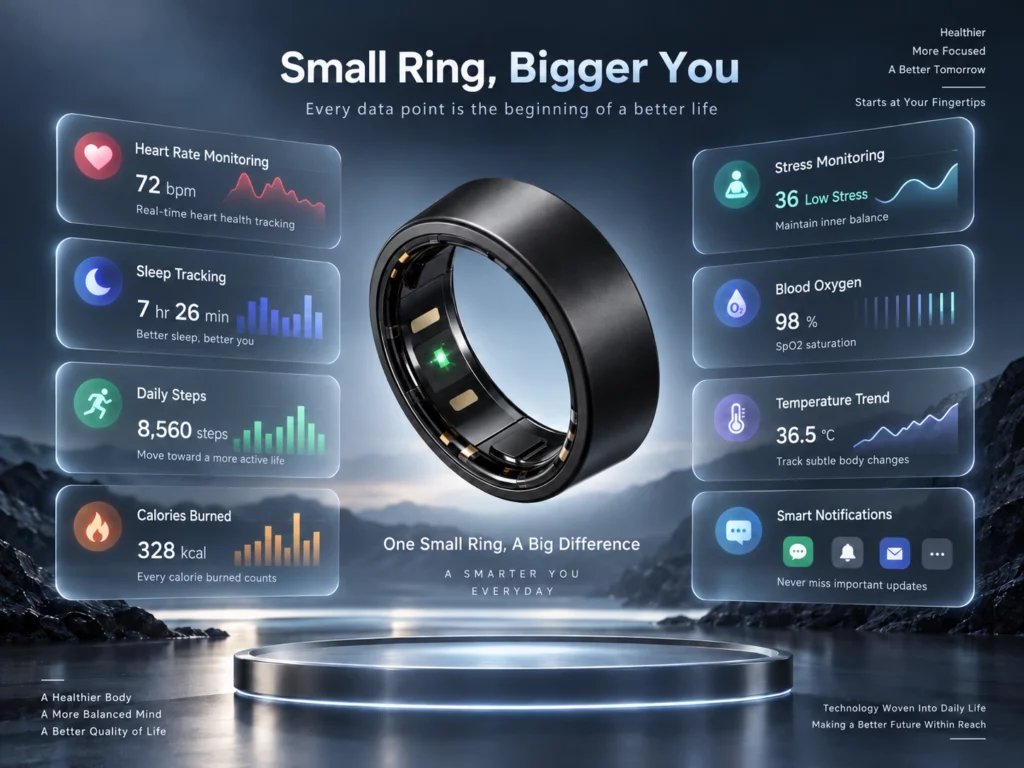
At first, the Smart Ring is used for monitoring your body’s parameters all the time in a non-invasive manner. There is no screen on it; it works in the background, and all the parameters can be tracked in the special app on your phone. In turn, the Smartwatch is a computer right on your wrist that can track your health and physical condition along with other things.
Thus, the differences between these two devices are not just related to their appearance.
1. Smart Ring vs. Smartwatch: What Are the Main Differences?
The main distinction between the two devices in terms of appearance lies in their positioning, but the real difference lies in how they are used by the users.
A Smart Ring Focuses on Passive Health Tracking
A Smart Ring is worn on the finger and typically contains optical and motion sensors. According to the model, it could include:
• Heart rate
• Resting heart rate
• Heart rate variability (HRV)
• Sleep
• Skin temperature trends
• Daily activity
• Blood oxygen
Most Smart Rings make use of PPG (photoplethysmography), which helps in obtaining information based on the pulse. This is done by emitting light using LEDs into the skin, while an optical sensor then detects variations in the absorption of the light depending on the amount of blood present.
The finger is a good location to do this because of the abundance of blood vessels and the ability of the ring to provide consistent skin contact.
Consumer-based Smart Rings should not always be classified as medical devices.
A Smartwatch Provides More Real-Time Interaction
The Smartwatch could incorporate similar optical and motion sensors but offers a completely different experience due to the use of its display.
For instance, while running, one might be able to view:
Heart rate: 145 bpm
Pace: 5:30 min/km
Distance: 6.2 km
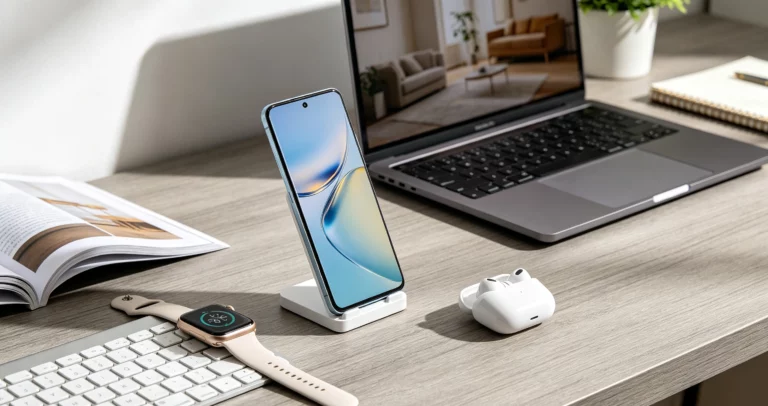
In addition to GPS, notifications, calls, music controls, applications, and contactless payments, many Smartwatches allow using some features without having a smartphone around.
In other words, a Smartwatch is not only a health monitor but an interactive extension of a smartphone.
Smart Ring vs. Smartwatch at a Glance
| Feature | Smart Ring | Smartwatch |
| Worn on | Finger | Wrist |
| Display | Usually none | Usually included |
| Health tracking | Strong | Strong |
| Sleep tracking | Designed for continuous wear | Commonly supported |
| GPS | Usually relies on phone | Built into some models |
| Workout data | Mostly viewed afterward | Available in real time |
| Notifications | Limited or none | Extensive |
| Apps | Few or none | More widely available |
| Interaction | Low | High |
| Battery life | Usually longer | Often affected by display/GPS |
And the main difference lies not just in “big vs. small”. The Smart Ring uses minimal interaction and background data collection, whereas the Smartwatch presents information right away and acts upon it.
Battery Life Reflects Different Priorities
The display plays an important role in determining battery drain in Smartwatches. The GPS feature, LTE, constant displays, and notifications can drain the battery even more.
Battery life differs from model to model, yet in general, the majority of mainstream smartwatches have battery life of 1-3 days, while there are some models that offer much more battery life.
In the case of Smart Rings, they can last 4-8 days due to the fact that they do not have a powerful display and cannot provide numerous functions.
This is just an approximate range. The actual battery life depends on the device and usage.
As far as health tracking is concerned, the frequency of charging is important because taking the device off during sleep and exercise leads to interruptions.
2. Smart Ring vs. Smartwatch: Which Is Better for Health and Sleep Tracking?
Both devices have the capability to provide health data; however, just because both use the same sensors does not mean that they provide the same experience.
Understanding Heart Rate and HRV
An average heart rate for adults is estimated to be in the range of 60-100 beats per minute, but there can be big variances based on fitness, age, medications, or physiology.
Wearables also measure HRV, or heart rate variability, that is, variations in the time interval between successive heartbeats, and it is measured in milliseconds.
Heart rate variability can be affected by sleep, stress, workouts, alcohol intake, illnesses, and a lot of other factors. A higher value is not necessarily an indicator of being healthier. It is more important to monitor changes relative to your own average values.
Why Smart Rings Work Well for Sleep Tracking
For adults, sleep time is usually recommended between 7 and 9 hours each day, meaning that the wearable needs to stay comfortable for a number of hours consecutively.
Smart Rings have no bright screens and take up very little space, making them convenient for wearing during the night for individuals who find it uncomfortable to wear a watch while sleeping.
When worn at night, Smart Rings will be able to monitor:
Motion + Heart Rate + HRV + Temperature Trends
The corresponding software can produce sleep/recovery/readiness scores, among others.
Smartwatches Can Track Sleep Too
A smartwatch also has the ability to monitor heart rate, activity, blood oxygen levels, temperature variations, and other data during nighttime, depending on the model.
What usually makes the difference is not monitoring, but comfort and preferences regarding charging.
If you feel comfortable wearing a watch while sleeping and your battery life covers both day and night usage, the Smartwatch may become a good sleep tracker.
Sleep Stages Are Estimates
Awake, light, deep, and REM sleep information needs to be understood cautiously.
Most consumer devices calculate sleep stages by combining various parameters like body movements, heartbeat, HRV, and algorithms.
Clinical polysomnography (PSG) measures a wide array of physiological signs, including electrical activity of the brain, eye movements, muscle movements, breathing, etc.
Hence, wearables are more appropriate for tracking sleep patterns rather than taking every single night’s sleep stage results clinically.

Fitness Tracking Creates a Clearer Difference
Smartwatches will be helpful for jogging, cycling, and trekking in case you need heart rate, pace, distance, workout duration, or GPS tracking data while working out.
However, a Smart Ring will suit those who prefer to monitor their health data passively and later analyze it.
Additionally, rings are not very comfortable to wear while weightlifting, deadlifting, pull-ups, and using kettlebells.
Comfort Can Affect Data Quality
The sizing of the Smart Ring is especially significant. The loose ring may lower the effectiveness of the sensors, whereas a too-tight fit may be uncomfortable because fingers tend to fluctuate in size.
The Smartwatches also have their own issues related to the sizing of the case, its weight, the material of the straps, and the size of the strap. A loose watch may influence the contact between the optical sensors and the skin.
However, a tight strap may lower the comfort of wearing the device.
Conclusion
A Smart Ring and a Smartwatch cannot be considered substitutes for each other. Smart Rings concentrate on continuous health monitoring, sleep tracking, long battery life, and reduced interactions. Smartwatches combine health-related data with GPS, instant exercise data, notifications, and applications.
It is more important to consider how the device is going to be used than just compare the number of sensors.
0