Rock bolts have wide-ranging uses in underground mines, tunnels, slopes, and other geotechnical structures. They strengthen rock masses, help control ground movement, and improve structural stability, depending on the geology. That said, not all rock bolts suit every application. Several considerations come into play when choosing products.
Knowing the major types of rock bolts can help you make sound purchasing decisions. Good rock bolt suppliers should offer a wide product selection, provide technical information, and help consumers identify a suitable solution.
1. What Types of Rock Bolts Do Rock Bolt Suppliers Offer?
Different rock bolts are designed for different ground conditions and installation requirements. The following five types are common in mining, tunneling, and geotechnical engineering.
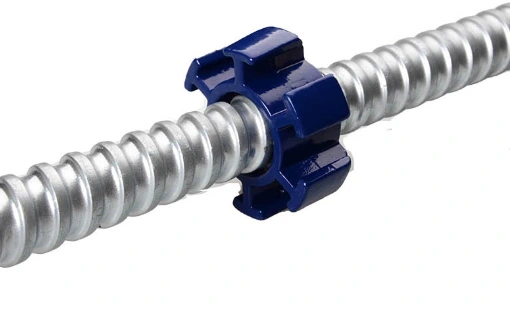
1.1 Solid Bar Rock Bolts
Steel rods with specific mechanical properties make up solid bar rock bolts. This type of rock bolt enhances the surrounding rock mass by transferring loads through the anchor system.
These bolts are commonly used in underground mines, tunnels, and rock reinforcement projects where the ground conditions and installation design are suitable.
When evaluating solid bar products, buyers should consider tensile strength, steel grade, bar diameter, corrosion protection, and compatibility with plates, nuts, and other accessories. Experienced rock bolt suppliers should provide product specifications that allow customers to verify these details before ordering.
1.2 Hollow Grouted Rock Bolts
In hollow rock bolts, the central hole lets grout pass through the steel rod during installation. The grout enhances the bond between the rock bolt and the rock mass.
This design can be useful where grouting is needed to improve anchorage or where an internal grout passage benefits the installation process. Depending on the product design, hollow bolts may also be used in applications involving fractured rock masses.
Key considerations include bore diameter, grout compatibility, steel strength, corrosion resistance, and installation method. Consumers should be satisfied that the bolt system and grouting system are compatible.
1.3 Self-Drilling Rock Bolts
Self-drilling rock bolts combine drilling and reinforcement. The sacrificial drill bit is joined to the rock bolt. This leaves the hollow drill rod in the hole for grouting.
These systems are particularly useful in fractured, loose, or difficult ground where conventional drilling and separate bolt installation may be challenging. They can also reduce the number of installation steps.
When comparing self-drilling systems, consider factors such as threads, drill bit suitability, bar strength, couplings, and grout flow requirements. Competent rock bolt suppliers should be able to explain how the various parts of the chosen system are compatible.
1.4 Mechanically Anchored Rock Bolts
Mechanically anchored rock bolts use an expansion shell or other mechanical anchorage to secure the rock at the end of the borehole. After installation and tensioning, the rock bolt becomes a reinforcing device through its anchorage mechanism.
These bolts may suit certain underground mining and rock support applications where the surrounding rock provides reliable anchorage.
Their performance depends on factors such as rock strength, borehole dimensions, anchoring mechanism, and installation quality. They may be less suitable in highly fractured or weak rock if they cannot achieve the required anchorage.
1.5 Resin-Anchored Rock Bolts
Resin-grouted rock bolts use resin cartridges or a resin anchoring system to grout the bolt in the borehole. Once the resin sets, the bolt transfers load to the rock formation.
These systems are widely used in underground mining and tunneling applications that require rapid installation and reliable bonding.
Buyers should check the resin type, curing time, temperature conditions, bolt dimensions, and installation equipment. The selected resin system must be compatible with the bolt and the project’s ground conditions.
2. What Are the Differences Between Rock Bolt Types?
Although they serve similar applications, each product differs in its design, anchoring system, and installation process. These differences help project teams filter the products.
| Rock bolt type | Main feature | Typical application | Key consideration |
| Solid bar bolt | Solid steel bar construction | Mines and tunnels | Steel grade and anchorage design |
| Hollow grouted bolt | Internal passage for grout | Rock reinforcement requiring grouting | Grout flow and bond performance |
| Self-drilling bolt | Drilling and reinforcement in one system | Fractured or loose ground | Drill bit and component compatibility |
| Mechanically anchored bolt | Mechanical expansion anchorage | Suitable underground rock conditions | Rock strength and anchorage reliability |
| Resin-anchored bolt | Bonding through resin | Mining and tunneling support | Resin compatibility and curing conditions |
The categories above are not always mutually exclusive. For example, a self-drilling bolt may also be a hollow grouted bolt, while a solid bar bolt may use different anchoring methods depending on its design.
This is why consumers must consider the whole system, not just the product name, when making decisions. Neither bolt length nor steel strength will ensure good support. The system’s performance will depend on other factors.
When assessing rock bolt suppliers, ask for technical datasheets, material specifications, tolerances, and installation guidelines. This will make it easier to assess their suitability.
3. How Should You Choose Rock Bolts for Different Projects?
Select different materials based on geological conditions, the support system, the construction method, and the required lifespan. The best supplier will already know this.
3.1 Underground Mining
Rock bolts can also stabilize roof rock and excavated walls in underground mining and control local ground movement. Rock bolts can be resin-bonded, solid bar, or mechanically anchored.
Before buying, check the bolt requirements for length, diameter, mechanical properties, anchoring system, corrosion protection, and compatibility with the drilling equipment.
3.2 Tunnel Construction
The tunneling project may require changes to rock conditions during excavation. The support system may need to adapt to varying rock quality, groundwater conditions, and excavation and construction methods.
Engineers often evaluate solid bar bolts and grouted systems, and self-drilling bolts may help in poor rock conditions unsuitable for drilling.
Contractors should coordinate with the geotechnical and structural design teams to confirm bolt spacing, length, anchorage, and installation procedures. Rock bolt suppliers can support this process by providing technical documentation and helping verify product compatibility.
3.3 Fractured or Loose Ground
Drilling and stabilizing boreholes become very difficult, if not impossible, in fractured rocks. Therefore, self-drilling hollow systems can be used in such situations, where drilling and stabilization occur together, and grouting is done via the bar.
Nevertheless, the choice of any system depends on the extent of fracturing, groundwater, borehole stability, and design requirements. The supplier should consider these criteria with the project team, rather than making suggestions based on ground conditions alone.
3.4 Slope Stabilization and Geotechnical Reinforcement
Alternatively, rock bolts can be employed to fix rock slopes and provide stability to rock exposures. In some projects, the engineering design may call for conventional rock bolts, grouted bars, or other ground anchors.
One should also differentiate rock bolts from prestressed ground anchors or cable bolts because they serve completely different purposes.
When selecting products to stabilize slopes, consider design loads, anchorage lengths, corrosion protection, drainage, and expected service life. An engineering firm should be able to make this determination.
Conclusion
Rock bolts come in several types, including solid bar bolts, hollow grouted bolts, self-drilling bolts, mechanically anchored bolts, and resin-anchored bolts, among others. Each rock bolt system offers benefits depending on its use and application.
Choosing the right product requires more than comparing prices or dimensions. Buyers should evaluate mechanical properties, anchorage performance, material quality, installation compatibility, and compliance with project specifications. Reliable rock bolt suppliers can help simplify this process by providing clear technical information, consistent product quality, and appropriate support during product selection.
0