
Headphones and earphones are equally popular owing to the application of both devices in cases of music, movies, games, office work, traveling, and much more, despite the fact that both devices offer an absolutely different audio experience. In the first case, the drivers are installed outside the ear canal, while in the latter case, the drivers are installed inside the ear canal.
This placement has certain consequences for the sound quality, the ability to cancel noise, comfort, and portability. There is no doubt about the wrong assumption that people can make in choosing one of them – larger headphones mean better sound.
1. Headphones vs. In-Ear Headphones: How Do Their Designs Differ?
The most apparent distinction between the two devices is the location in which they are placed, either inside or outside the ear canal.
Headphones Offer More Acoustic Space
Headphones are devices that exist externally to the ear, and there are different types of headphones available, including over-ear, on-ear, open-back, and closed-back headphones.
Most headphones made for consumers use dynamic drivers whose size can range from 30 to 50 millimeters. The bigger the driver is, the greater its diaphragm surface area; however, a big diaphragm size does not necessarily translate to quality sound.
Materials for the diaphragm, magnetic structure, enclosure design, tuning, and digital signal processing are all elements that make up the sound production process.
Since the distance between the driver and the ear canal is increased, good headphone design is usually able to produce a better sense of space and sound imaging.
The open-back headphones are known for producing an open sound; nevertheless, they allow the outside noise to enter and even cause the sound to leak.
In-Ear Headphones Rely on a Good Seal
The size of the earphones is small, and their earpieces can be made from silicone or foam material that fits inside the ear canal.
If the fit is precise, then the earpieces create a physical barrier and hence reduce any external noise and maintain bass quality. This is why fit influences sound quality and is not merely about comfort.
Too small ear tips may lead to:
• Reduced bass
• Increased external noise
• Instability of fit
• The habit of increasing volume while listening
Big ear tips may rub against ears, thus making them uncomfortable.
In-ear headphones can feature dynamic, balanced armature, and even hybrid drivers. Contrary to ordinary headphones, an increase in driver complexity does not automatically guarantee better sound quality.
Headphones vs. In-Ear Headphones at a Glance
| Feature | Headphones | In-Ear Headphones |
| Wearing position | Outside the ear | Inside the ear canal |
| Size | Usually larger | Compact |
| Drivers | Usually larger | Usually smaller |
| Portability | Moderate | High |
| Passive isolation | Depends on earcup design | Strongly depends on fit |
| Soundstage | Often easier to make spacious | Usually more intimate |
| Comfort | Depends on headband and earcups | Depends on ear-tip fit |
Audio devices can produce frequencies in the range of 20 Hz – 20 kHz, which is pretty similar to the range of frequencies corresponding to the human ear. However, there is no direct connection between frequency and sound, since different headphones can produce the same range of frequencies and still differ from each other in sound.

2. Headphones vs. In-Ear Headphones: Which Is More Comfortable and Safer?
Comfort varies from person to person. The form of the ear, the size of the head, the duration of use, and the environment in which one uses them can all affect the selection of headphones.
Headphones Avoid Pressure Inside the Ear Canal
Headphones don’t necessarily have to go into the ear canal, which could make them more comfortable for those who don’t like earbuds in their ears.
Nevertheless, there are several comfort issues with full-sized headphones as well. The weight, headband pressure, ear cup sizes, and the material of the ear pads all matter.
There’s also a problem of heat retention with closed-back headphones when wearing them while exercising.
In-Ear Headphones Need the Right Ear Tips
Earpiece headphones tend to be light, but getting the right comfort requires fitting the appropriate ear tips well.
Fitting must give you:
Stability + Proper Seal + Absence of Any Pain
The idea isn’t to try pushing the earphones as deep or tight into your ears as possible.
Where there are different-sized ear tips, use them rather than those from the factory installation.
Hearing Safety Depends More on Volume and Time
Neither of the two is automatically safer for your ears. The main considerations are the following:
Level of sound exposure × Duration of exposure
According to the World Health Organization guidelines on safe listening, 80 dB for up to 40 hours per week is a benchmark for adults. As the sound level increases, the safe duration of sound exposure reduces dramatically.
In loud environments, increasing isolation and noise cancellation may be better than increasing the volume all the time.
Passive noise isolation and active noise cancellation (ANC) are also two different techniques. While the former works by physically blocking sound via ear cups or ear tips, ANC works with microphones and other means of reducing sound waves.
3. Over-ear headphones vs. earbuds: Which is suitable for which situations?
Your listening conditions play a larger role in determining the best option than any single specification does.
Commuting and Travel: In-Ear Headphones Are More Portable
In-ear headphones easily fit into one’s pocket or a small portable case.
The seal provided by ear tips can also be very helpful in passive noise isolation.
On the other hand, over-ear headphones that use ANC are perfect for situations where there is continuous noise in the surroundings, such as on long flights.
Work and Long Listening Sessions: Consider Headphones
Full-sized headphones could also serve better when it comes to extended listening sessions, web conferences, and sound recording since these headphones may create a more comfortable feeling for users who do not like pressure in their ear canals.
The open-backed headphones would sound more comfortable in private places because of the spaciousness that they create, but this could be an issue with sound leakage in a workplace setting.
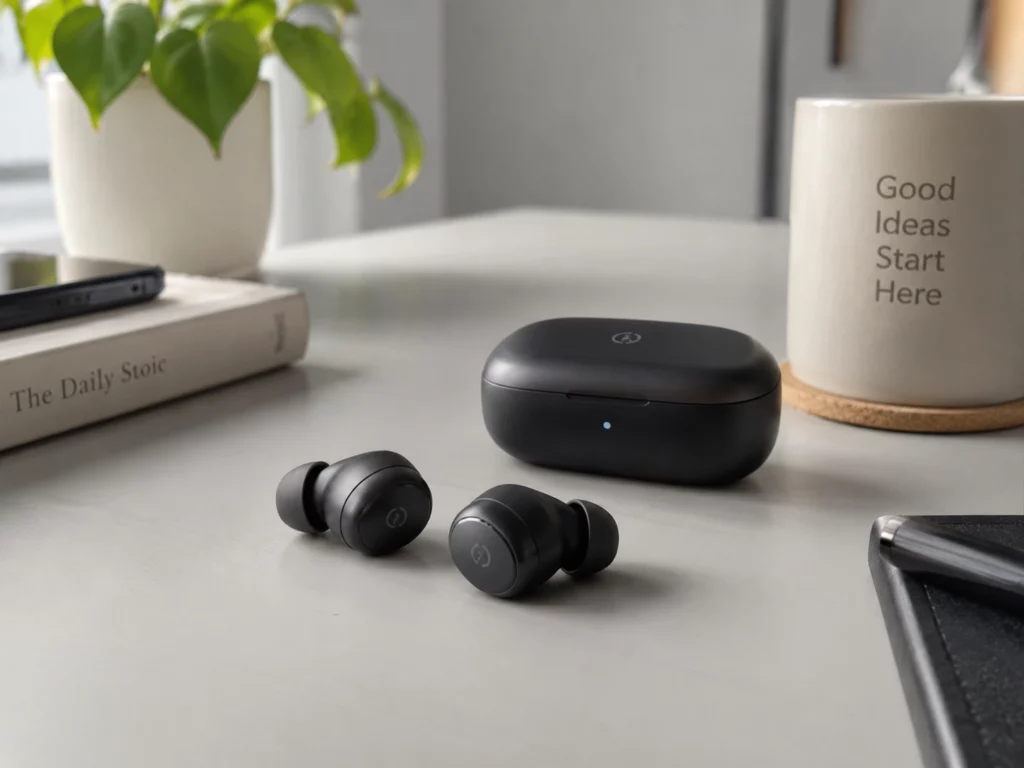
Exercise: In-Ear Headphones Are Usually More Practical
Movement is typical when one is running, cycling, or working out at the gym. Earbuds are usually better suited for such activities.
The following features are recommended:
• Fit that is comfortable
• Resistance to sweat
• Correct IP rating
• Easy to control
IP rating refers to a particular level of protection from water and/or dust. This does not necessarily mean that the gadget is waterproof.
Conclusion
With regard to utilization, the two devices are designed for varied uses. For instance, it would be more appropriate to use headphones in an open space for a long period, while earbuds can be used as portable devices. Nevertheless, everything depends on sound, comfort, isolation, and other factors.
0



.webp)