Introduction to Surface Mount Technology (SMT) Surface Mount Technology (SMT) is a method used in electronics manufacturing where components are mounted directly onto the surface of printed circuit boards (PCBs). This contrasts with the older through-hole technology, where components are inserted into holes drilled in the PCB. SMT has become the industry standard due to its numerous advantages, such as higher assembly speed and more compact product design. By eliminating the need for drilling holes, SMT Machines allows for greater automation in the manufacturing process and the production of smaller, lighter, and more reliable electronic devices.
Core Components and Functionality
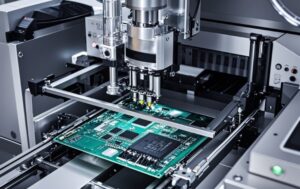
Pick-and-place machines are essential for the SMT process. They use robotic arms equipped with vacuum nozzles or grippers to pick up components from reels or trays and accurately place them onto the PCB. Modern pick-and-place machines are highly automated and can place thousands of components per hour, achieving precise positioning even with extremely small and delicate parts.
Reflow Ovens: After the components are placed on the PCB, the assembly is transported through a reflow oven. The oven heats the entire board, causing the earlier solder paste to melt and form solid solder joints. The heating process is carefully controlled to ensure the solder melts uniformly without damaging the components.
Solder Paste Printers: These machines apply a stencil or screen to deposit solder paste onto the PCB pads. The paste consists of fine solder particles suspended in a flux medium, which temporarily holds the components in place before soldering and ensures a reliable electrical connection.
Applications and Benefits of SMT Machines SMT is used in a wide range of industries, including consumer electronics, telecommunications, automotive, aerospace, and medical devices.
The benefits of using SMT machines include:
Increased Manufacturing Speed: Automated SMT machines can place components much faster than manual methods, significantly increasing production throughput and reducing labor costs.
Higher Component Density: SMT allows for more components to be placed on a smaller surface area, which is crucial for creating compact and lightweight electronic devices. This is particularly important in the development of portable electronics, such as smartphones and wearables.
Improved Reliability and Performance: The precise placement and consistent soldering provided by SMT machines result in more reliable and high-performance products. The reduced likelihood of human error also enhances the overall quality of the electronic assemblies.
Versatility: SMT can be used to assemble a wide variety of electronic components, from tiny resistors and capacitors to complex integrated circuits. This versatility makes it suitable for a diverse range of applications and industries.
Challenges and Future Trends in SMT Despite its many advantages, SMT faces several challenges:
Miniaturization of Components: As consumer demand for smaller and more powerful electronic devices increases, the components used in SMT must also become smaller. This trend presents challenges in terms of placement accuracy and soldering quality, requiring ongoing advancements in equipment and techniques.
Complexity of Designs: Modern PCBs are becoming increasingly complex, with more layers and densely packed components. This complexity requires more sophisticated SMT machines and processes to ensure accurate placement and reliable soldering.
Environmental Considerations: There is a growing emphasis on sustainability in electronics manufacturing. The SMT industry is exploring environmentally friendly materials and processes, such as lead-free solder and more efficient energy usage in production.
Future trends in SMT include the integration of advanced automation and artificial intelligence (AI) to enhance the precision and efficiency of the manufacturing process. AI can be used for real-time quality control, identifying defects and optimizing production parameters to improve yield and reduce waste. Additionally, new materials and technologies are being developed to meet the demands of high-frequency and high-performance applications, such as 5G communications and advanced computing.
0