In modern buildings, elevator ceiling designs are more than simple vertical transportation systems. They are enclosed environments where passengers often spend time in proximity, making lighting quality and safety essential factors. Poor illumination or inadequate ceiling planning can lead to discomfort, reduced visibility, and even safety concerns, especially in high-traffic or commercial buildings.
A well-planned elevator ceiling design helps create a stable lighting environment that supports clear visibility, reduces the risk of accidents, and ensures that lighting systems function reliably under daily use as well as emergency conditions. By integrating appropriate lighting layouts, materials, and structural considerations, ceiling design contributes directly to safer elevator operation and a more dependable overall system.
How Elevator Ceiling Design Improves Lighting Performance
- Even Light Distribution and Reduced Blind Spots: A well-designed ceiling allows light to be distributed evenly throughout the elevator cabin, avoiding overly bright or dark areas. Proper placement of lighting fixtures helps eliminate shadows in corners and along walls. This improves visibility when passengers enter or exit the elevator and reduces the risk of slips or missteps. Consistent lighting also makes the space feel more controlled and reliable for daily use.
- Support for Energy-Efficient Lighting: Modern ceiling layouts are commonly designed to support LED lighting systems, which offer stable brightness with lower energy consumption. Ceiling structures that are planned specifically for these systems help maximize light output while minimizing glare. Reduced heat generation also lowers stress on electrical components. Over time, this contributes to lower operating costs and fewer lighting-related failures.
- Enhanced Light Reflection: Ceiling materials and surface finishes play an important role in how light spreads within the cabin. Reflective or light-diffusing surfaces help distribute illumination more evenly without increasing power usage. This improves overall brightness while maintaining energy efficiency. Effective reflection also supports clearer visibility in compact or high-use elevators.
The Role of Ceiling Design in Elevator Safety
- Improved Visibility During Emergencies: Ceiling designs that integrate emergency lighting ensure that basic illumination remains available during power outages or system interruptions. Clear visibility helps passengers remain calm and oriented while waiting for assistance. Proper placement of emergency lights prevents complete darkness inside the cabin. This is especially important in high-rise buildings or public facilities.
- Use of Fire-Resistant and Durable Materials: Ceilings are often constructed using materials that meet fire-resistance and durability standards required for elevator systems. These materials help slow the spread of fire and protect internal wiring and lighting components. Durable construction also reduces the risk of damage caused by vibration or long-term use. Compliance with safety regulations is a key factor in material selection.
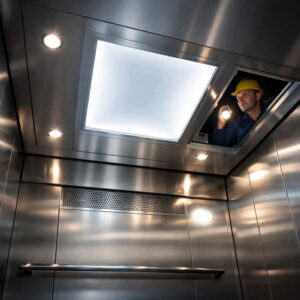
- Easier Inspection and Maintenance: A practical ceiling structure allows technicians to access lighting fixtures, wiring, and safety components efficiently. Easy access reduces maintenance time and minimizes service disruptions. Well-planned designs help identify issues early before they become serious problems. This supports safer operation and more reliable long-term performance.
The Importance of Choosing the Right Lift Service Company
When planning elevator ceiling design planning elevator lighting, and safety systems, selecting a reliable lift service company plays a critical role. An experienced service provider can evaluate ceiling structures from a technical and safety perspective, helping to ensure elevator ceiling design prevents lighting installations or structural components from interfering with elevator operation or safety systems.
A qualified service company is also familiar with applicable regulations and industry standards. This allows proper planning for emergency lighting, power supply layouts, and necessary access points for maintenance. These considerations are essential for improving visibility during emergencies and reducing long-term safety risks. From an operational standpoint, working with a professional service team helps minimize lighting-related failures, supports stable elevator performance, and ensures consistent technical support throughout the system’s lifecycle.
Conclusion
In summary, elevator ceiling design plays an important role in shaping both lighting performance and overall passenger safety. Well-planned ceiling structures support consistent illumination, reliable emergency lighting, and compliance with safety standards throughout daily operation. When combined with appropriate materials and professional technical input, these systems help reduce operational risks and maintenance issues over time. For building owners and facility managers, investing in well-designed ceiling solutions contributes to safer, more dependable, and more efficient elevator systems in the long term.
0