
In the era of AI-driven search, traditional SEO is rapidly evolving into a more advanced approach known as GEO Service. This strategy focuses not only on geographic targeting but also on optimizing content for generative AI engines. By leveraging GEO Service, businesses can improve their visibility in AI-generated results and dominate search outcomes. To achieve this, a structured workflow supported by advanced tools is essential. Below is a complete breakdown of the tools used across a full GEO Service execution process.
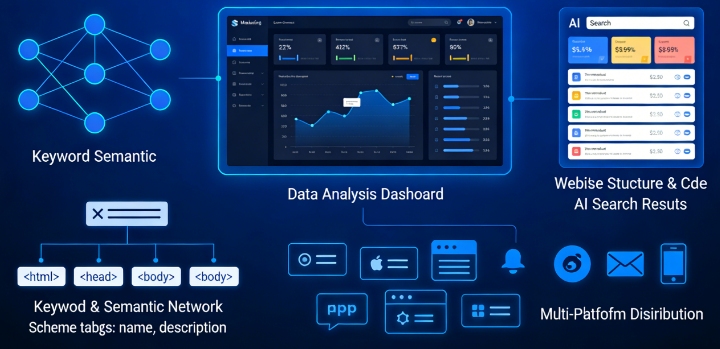
GEO Service Diagnostic Tools
The first step in any GEO Service strategy is diagnosis. At this stage, specialized tools are used to identify why a brand is not appearing in AI-generated results:
- AI visibility tracking tools: These tools analyze whether a brand is being cited or referenced in generative search outputs, helping identify gaps in AI recognition.
- Website audit tools: They scan technical aspects such as page structure, loading speed, and indexing issues that may affect the GEO Service
- Keyword and intent analysis tools: These help uncover missing semantic coverage by analyzing how users search and how AI interprets those queries.
- Competitor analysis platforms: By comparing competitors’ visibility in both traditional and AI search, businesses can detect opportunities and weaknesses.
This phase ensures a clear understanding of current positioning and highlights the root causes of poor GEO performance.
Semantic Modeling and Entity Tools
The next step in GEO Service is semantic modeling, where the goal is to help AI better understand your brand and content:
- Semantic mapping tools: These tools create structured relationships between keywords, topics, and concepts, forming a clear semantic network for AI systems.
- Entity recognition and knowledge graph tools: They define key entities such as brands, products, and services, strengthening how AI identifies and associates your content.
- Content clustering tools: These group related content into topic clusters, improving site structure and AI readability.
- Natural Language Processing (NLP) tools: NLP tools enhance content clarity and alignment with how AI models interpret language.
This stage focuses on building a strong semantic foundation so that AI can accurately understand and prioritize your content.
Technical Optimization and Schema Tools
Once the semantic structure is defined, the next step is technical reconstruction to ensure compatibility with AI systems:
- Schema markup tools (Structured Data): These tools help implement structured data (such as JSON-LD), making it easier for AI to interpret page content like products, reviews, and locations.
- Performance optimization tools: Page speed testing and optimization tools ensure that websites load efficiently, which is crucial for both users and AI crawling.
- Code validation tools: These tools detect and fix HTML, CSS, and JavaScript issues that may interfere with AI understanding.
- Mobile optimization tools: Since most AI queries come from mobile devices, ensuring responsiveness is critical for the GEO Service
This phase improves the technical foundation of your website, making it more accessible to AI systems.
Content Distribution and Off-Page GEO Tools
After optimization, GEO Service focuses on content distribution to increase exposure across AI training datasets:
- Content distribution platforms: These tools help publish content across blogs, media sites, and third-party platforms to expand reach.
- Backlink and outreach tools: High-quality backlinks increase domain authority, improving the likelihood of being referenced by AI systems.
- AI data exposure tools: These tools target platforms frequently used in AI training data, such as Q&A sites, forums, and knowledge bases.
- Social distribution tools: Multi-channel sharing tools help amplify content visibility across different networks.
The goal here is to “feed” AI systems with consistent, high-quality content across multiple sources.
Monitoring, Tracking, and Iteration Tools
GEO Service is not a one-time process—it requires continuous optimization through monitoring and iteration:
- AI citation tracking tools: These monitor how often your brand appears in AI-generated answers and evaluate content performance.
- Rank tracking and geo-analysis tools: These tools measure performance across different regions and AI platforms.
- Data analytics dashboards: They collect and analyze user behavior data to determine which content is most effective.
- Automated optimization systems: These systems adjust strategies based on algorithm updates and performance trends.
This phase ensures continuous improvement and adaptation to evolving AI algorithms, keeping your GEO Service strategy competitive.
Conclusion
In summary, GEO Service is a comprehensive, AI-focused optimization strategy that requires a combination of diagnostic, semantic, technical, distribution, and monitoring tools. From identifying gaps and building semantic structures to optimizing content and tracking performance, each tool plays a vital role in the overall workflow. By effectively integrating these tools into a structured GEO Service strategy, businesses can significantly improve their visibility in generative AI search results and secure a strong competitive advantage in the evolving digital landscape.
0