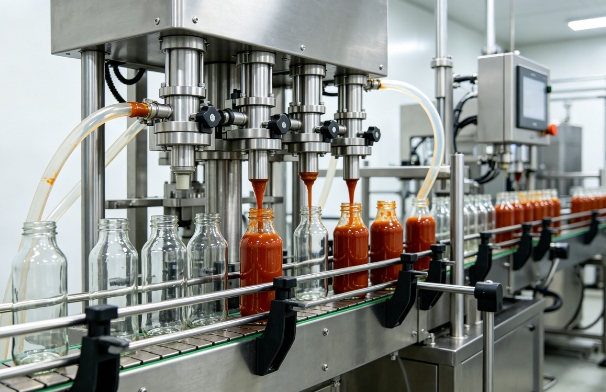
In modern food, beverage, cosmetic, and chemical industries, filling viscous liquids is a significant technical challenge. Thick liquids such as syrup, honey, jams, and tomato sauce have low flowability and are prone to dripping, clogging, or uneven filling during production. These issues can reduce efficiency and affect product quality and appearance. To address these challenges, a specialized bottle filling and capping machine is designed. By combining screw pumps, precise flow control, anti-drip nozzles, and automatic capping systems, it ensures viscous liquids are bottled efficiently, accurately, and hygienically, providing a reliable solution for production lines.
1. Special Filling Design for Viscous Liquids
Filling high-viscosity liquids differs significantly from filling water-like liquids. Their slow flow and stringy texture can cause them to cling to pipes or nozzles when stopped. Modern bottle filling and capping machines typically include:
- Screw pumps or gear pumps: Screw pumps deliver viscous liquids smoothly and continuously, preventing bubbles and backflow. Gear pumps provide stable flow for precise high-viscosity filling.
- Adjustable flow and filling time: Machines can be programmed based on liquid viscosity and bottle type to ensure each bottle is filled with the exact volume, minimizing errors and waste.
- Optional temperature control: For liquids prone to solidification, like honey or syrup, heating systems maintain flowability and prevent blockages or uneven filling.
- Flexible piping design: Reduces liquid retention in the pipes, facilitating easier cleaning.
These features allow viscous liquids to be filled consistently and efficiently, ensuring high production quality.

2. Anti-Drip and Precise Control
Viscous liquids tend to stick to bottle mouths, which can lead to waste and contamination if not properly managed. High-quality bottle filling and capping machines address this with:
- Anti-drip nozzles: Instantly stop liquid flow when filling ends, preventing drips.
- Electronic precision control: PLC or touchscreen systems regulate filling time, flow rate, and pump speed, maintaining consistent bottle volumes and allowing quick adjustment for different products.
- Automatic liquid backflow: Some advanced machines retract a small amount of liquid after filling, preventing residue on the nozzle or bottle mouth.
- Anti-foam design: For liquids prone to foaming, slow filling or rotating pump heads reduce bubble formation for cleaner filling.
These functions reduce material waste, improve production hygiene, and enhance product appearance.
3. Efficient Capping
After filling, capping is equally crucial, especially with viscous liquids:
- Automatic screw or press capping: Mechanized systems tighten caps consistently and reduce manual labor, improving production efficiency.
- Anti-residue design: Machines may include nozzle cleaning or mild vibration to remove leftover liquid, ensuring a clean bottle mouth and preventing leakage after sealing.
- Adjustable torque: Cap tightness can be adjusted based on bottle material and liquid type to secure a proper seal without damaging the bottle or cap.
- Compatibility with multiple cap types: Machines can handle screw caps, press caps, or foil seals, adapting to various products.
This ensures bottles are visually clean, properly sealed, and safe for storage and transport.
4. Adjustable Production Speed
Viscosity differences require flexible control of filling speed and production rhythm:
- Adjustable flow and pump speed: Slower filling is used for high-viscosity liquids to avoid bubbles or overflow, while lower-viscosity liquids can be filled faster to maximize output.
- Synchronized capping: Filling and capping are perfectly synchronized to prevent bottle stacking or line blockage.
- Quick bottle changeover: Modular designs allow rapid adjustment of filling heads and support brackets, accommodating different bottle types and sizes.
- Intelligent monitoring: Some machines include real-time monitoring for filling errors, cap tightness, and liquid level, ensuring continuous operation.
These features maintain high efficiency while allowing flexibility for diverse product types.
5. Wide Range of Applications
High-viscosity bottle filling machines are widely used across industries:
- Food and beverage: Syrup, honey, jam, soy sauce, tomato sauce, salad dressings.
- Cosmetics: Creams, lotions, shampoos, conditioners, and other viscous products.
- Pharmaceuticals: Ointments, nutritional liquids, gel-based medications.
- Chemicals: Industrial gels, lubricants, concentrated liquids.
With precise filling, efficient capping, anti-drip design, and intelligent control, bottle filling and capping machines are indispensable for high-viscosity production lines.
Conclusion
For viscous liquids such as syrup, honey, or sauces, selecting a specialized bottle filling and capping machine is critical. These machines combine screw pumps and precise flow control to ensure accurate filling, while anti-drip nozzles, automatic backflow, and intelligent capping maintain a clean, waste-free process. Production speed and operation modes can be adjusted to suit different liquids and bottle types, increasing efficiency and reducing labor costs. Overall, these machines ensure consistent product quality and meet the rigorous requirements of the food, cosmetic, and chemical industries, making them essential equipment for modern production lines.
0