A well-programmed traffic signal timer can dramatically improve how smoothly vehicles and pedestrians move through intersections. Efficient timing not only reduces delays and fuel consumption but also enhances safety and overall traffic coordination.
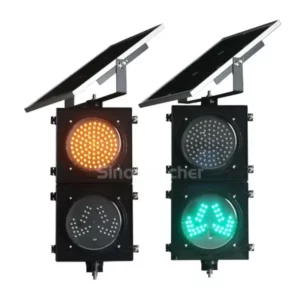
Step 1: Conducting Traffic Flow Analysis
- Engineers use sensors and cameras to collect data on vehicle volume, speed, and turning movement.
- The data identifies peak and off-peak periods, allowing different timing schedules throughout the day.
- Pedestrian crossing frequency, school zone hours, and nearby bus routes are also factored in.
By analyzing this data, traffic planners can determine the best signal cycle length — the total time for one full sequence of lights.
Step 2: Determining Cycle Length and Phase Split
The cycle length determines how long it takes for the traffic signal timer to complete all phases.A shorter cycle may reduce waiting times but can cause more frequent stops, while a longer cycle might keep vehicles waiting unnecessarily.
Phase splits refer to how much time is allocated to each direction. For instance, a busy main road may receive a longer green phase than a smaller side street.Fine-tuning these splits ensures that all directions get a fair share of movement time, maintaining balance across the intersection.
Step 3: Setting Up Coordination Between Intersections
Programming efficiency doesn’t end at one intersection. When multiple traffic signal timers are coordinated, they create a smooth corridor for drivers.
- By synchronizing timers, vehicles can move through several green lights in sequence — known as the “green wave”
- Coordination reduces stop-and-go driving, improving travel time and reducing fuel use.
- Adjustments must account for factors like distance between intersections, vehicle speeds, and direction of flow.
Coordinated programming is one of the most effective strategies to reduce congestion in urban areas.
Step 4: Integrating Adaptive and Actuated Controls
Modern traffic signal timers often include actuated and adaptive controls to improve flexibility.
- Actuated controls use vehicle detectors to adjust green phases based on demand.
- Adaptive systems rely on real-time data, automatically modifying cycles to fit current traffic volumes.
This level of automation ensures that no phase stays green or red longer than necessary, maximizing overall efficiency.Such systems are particularly useful in areas with unpredictable traffic patterns, like near shopping centers or stadiums.
Step 5: Testing and Calibration
After programming, each traffic signal timer must be tested under real conditions.Engineers monitor intersections during different times of the day to evaluate performance.
Adjustments may be needed to eliminate bottlenecks or shorten long waits for minor streets.
- Continuous calibration ensures that the programmed settings remain effective as traffic conditions evolve over time.
- Some systems can be fine-tuned remotely through cloud-based platforms, allowing cities to react instantly to changes in flow or emergencies.
Common Mistakes to Avoid
While programming can improve efficiency, poor configurations can cause the opposite effect.
- Setting identical cycles for all intersections ignores local variations in traffic demand.
- Neglecting pedestrian timings may create safety conflicts.
- Overly long cycles can increase driver frustration and encourage red-light running.
- Failing to update data regularly can make the program obsolete.
A well-maintained and frequently updated traffic signal timer plan prevents these issues and keeps intersections functioning optimally.
Conclusion
On the road, if programmed properly, traffic signal timers can transform intersections into coordinated, responsive systems that save time, reduce emissions, and make roads safer for everyone.
0