Outdoor fiber cable is appropriate for installation outdoors. It can endure moisture, temperature fluctuation, UV exposure, and mechanical tension. It has an outer sheath made up of tough substances such as polyethylene or low-smoke, zero-halogen (LSZH) to protect against environmental attacks effectively.
Inside the cable, there is one or more glass or plastic fibers to transport data as light pulses. These fibers can be reinforced with strength members for extra ruggedness.

Common Outdoor Fiber Cable Types
There are several outdoor optical cables used for different application conditions in order to meet environmental and mechanical requirements. The following is a very brief introduction to the types:
Aerial Fiber Cable
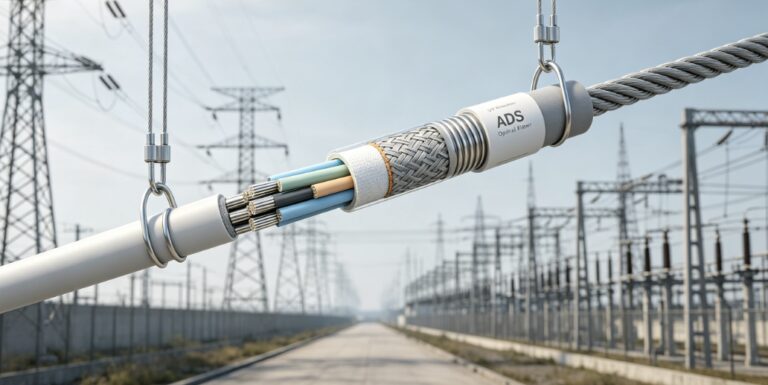
Aerial cables suspend over poles and must withstand wind, rain, and sunlight exposure. They typically incorporate steel wire reinforcement or messenger cables to add tension strength. Ordinary types include ADSS (All-Dielectric Self-Supporting) cables, which are metallic-free, reducing interference hazards.
Direct-Burial Cable
These cables are laid directly in the ground without additional conduits. They possess strong protection layers and water-blocking capabilities that prevent damage from moisture in the ground, rodents, or mechanical tension.
Duct Fiber Cable
Designed to be laid within protective conduits or ducts, duct fiber cables are flexible and easy to pull. They are typically found in urban and campus network topologies.
Armored Fiber Cable
Armored cables have a metal or non-metallic armor layer protecting against physical damage caused by crushing or rodents. That is the reason why they are used in industrial or military applications where ruggedness is necessary.
Outdoor fiber cable selection is based on environment, installation method, and size of project.
Benefits of Outdoor Fiber Cable
The outdoor fiber cable boasts several significant benefits compared to indoor optical or conventional copper cables.
- Durability: Outdoors fiber cables are engineered to resist extreme weather, mechanical stress, and UV exposure without degrading.
- High Bandwidth: Fiber optic cables transfer significantly higher data rates than copper cables, making them perfectly suited for modern broadband and telecommunication networks.
- Low Signal Loss: Even over long distances, outdoor fiber cables maintain signal integrity and minimize data loss.
- Security: Since optical signals are difficult to tap or interrupt, fiber networks provide greater data security.
- Cost Effectiveness: Although the initial price is higher, long-term maintenance and better performance charges make outdoor fiber installations economical.
In large network projects such as metropolitan networks or backbone installations, outdoor fiber cable is an indispensable solution for high-capacity, reliable connections.
Applications of Outdoor Fiber Cable
Outdoor fiber cables are used in multiple industries where high strength and dependable data transmission are required. A few common applications include the following:
Telecommunication Networks
Telecom operators utilize outdoor fiber cables to connect central offices, base stations, and customer premises. For 5G and FTTH applications, these cables are the pillars of high-speed data exchange.
Industrial Environments
Factories and refineries typically use outdoor fiber cables to connect control systems and monitoring devices over long distances. Armored models are used in harsh or risky environments.
Campus and Enterprise Networks
School campuses, office complexes, and hospitals employ outdoor cables to interconnect multiple buildings with guaranteed signal speed and reliability.
Military and Security Systems
Defense and surveillance bases rely on outdoor fiber cable for high-speed data communication and safe data transfer, typically over long distances or difficult ground.
Data Centers and Cloud Infrastructure
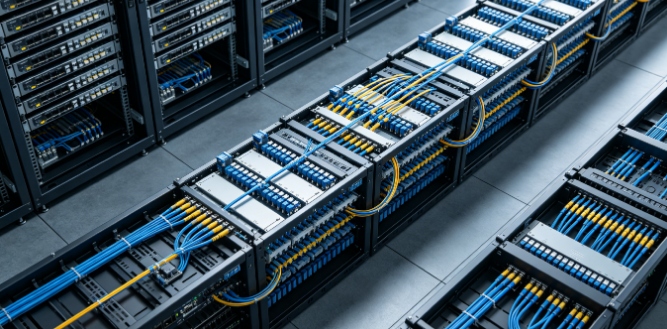
Increased demand for cloud computing has necessitated stable interconnection of data centers. Outdoor fiber cables provide stable and high-capacity links for continuous use.
All these instances demonstrate how important the outdoor fiber cable is to the modern communication systems.
How to Select the Proper Outdoor Fiber Cable
The proper outdoor fiber cable selection is based on the project’s specific needs. The following are some factors to consider when making your choice:
- Cable Construction: Loose tube, ribbon, or central tube construction can be selected based on the quantity of fibers required and the installation conditions.
- Fiber Type: Single-mode fibers are best suited for long-haul transmission, whereas multimode fibers are applied to shorter links or local networks.
- Strengthening Member Material: Aramid yarns or fiberglass rods can offer tensile support and breakage resistance while installing.
- Operating Temperature: Check the cable’s temperature rating range for consistency with local climatic conditions.
- Certification and Standards: Check whether the cable is compatible with international standards such as IEC, ITU-T, and ISO to guarantee performance and safety.
A properly chosen outdoor fiber cable not only increases network reliability but also reduces the cost of long-term maintenance.
Conclusion
The outdoor fiber cable is a pillar of contemporary telecommunication infrastructure. Its potential to provide high-speed, stable, and reliable data transmission through difficult environments makes it an essential tool for the digital world of today.
0