The multicolored bougainvillea is a well-known ornamental climbing plant admired for its vivid bracts in shades of pink, purple, red, orange, and white. It is widely used in landscaping for walls, fences, pergolas, and garden structures because of its fast growth and dramatic visual impact. One of its most remarkable characteristics is its ability to perform well in warm environments, which leads many gardeners to ask whether it can truly thrive in hot and dry climates. The answer is yes—multicolor bougainvillea is naturally adapted to heat and drought conditions, but its performance still depends on proper care, soil quality, and sunlight exposure. Understanding how it behaves in such environments helps ensure healthy growth and continuous flowering.
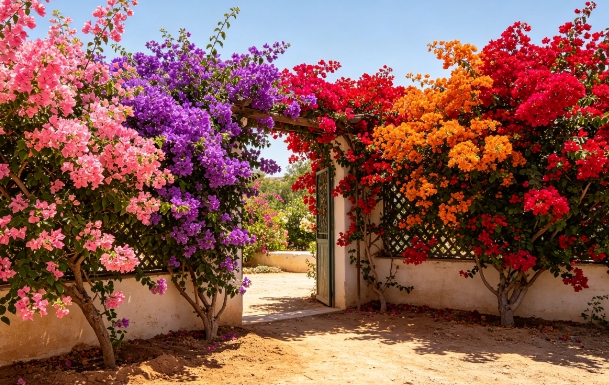
Natural Adaptation to Heat and Drought Conditions
Multicolor bougainvillea originates from tropical and subtropical regions, which explains its strong tolerance to heat and dry weather.
- Deep root system supports drought survival
The plant develops deep and extensive roots that allow it to access moisture stored in lower soil layers. This natural adaptation helps multicolor bougainvilleasurvive long periods without frequent watering. - Reduced water loss through thick bracts and leaves
Its foliage and bracts are designed to minimize water evaporation. This characteristic enables the plant to conserve water efficiently, making it highly suitable for hot climates. - The ability to slow growth under extreme heat stress
During very high temperatures, the plant may temporarily reduce growth activity to conserve energy and water, then quickly recover when conditions improve. - Strong resilience compared to many ornamental plants
Unlike many flowering species that wilt in dry conditions, multicolor bougainvillea maintains structure and vitality even during extended heatwaves.
Ideal Growth Conditions in Hot, Dry Climates
Although multicolor bougainvillea thrives in heat, certain environmental conditions significantly improve its performance.
Full sunlight exposure enhances flowering
This plant needs a minimum of 6 to 8 hours of direct sunlight daily. In hot climates, strong sunlight actually stimulates more vibrant and frequent blooming.
Well-drained soil prevents root stress
Sandy or loamy soil is the ideal choice, as it prevents water retention—a crucial factor in dry environments where occasional irrigation is required.
Good air circulation reduces overheating risks
Proper spacing and open planting areas help prevent heat buildup around the plant, supporting healthier growth.
Minimal shade encourages stronger color development
Shaded environments reduce flowering intensity, while full sun conditions enhance the richness of multicolored bracts.
Watering and Maintenance Strategies in Dry Environments
Even though multicolor bougainvillea is drought-tolerant, proper watering techniques are still essential for optimal growth in hot regions.
- Deep but infrequent watering schedule
Instead of frequent light watering, deep irrigation encourages roots to grow downward, improving drought resistance and plant stability. - Allowing the soil to dry between watering cycles
The plant performs better when the topsoil dries out slightly before the next watering, preventing overhydration issues. - Mulching to retain soil moisture balance
Organic mulch helps reduce evaporation and keeps soil temperature stable during extreme heat. - Avoiding excessive irrigation during peak summer heat
Overwatering in hot climates can lead to weak root systems and reduced flowering performance.
Growth Performance and Flowering in Hot Climates
Hot and dry conditions can actually enhance the ornamental value of multicolored bougainvillea when properly managed.
- Increased flowering intensity under strong sunlight
The plant often produces more vibrant and frequent blooms when exposed to prolonged sunlight. - Compact growth with richer color saturation
Heat stress within tolerable limits can lead to more concentrated bract coloration and visually striking displays. - Extended blooming seasons in warm regions
In tropical and arid climates, multicolored bougainvillea may bloom multiple times throughout the year. - Reduced pest pressure in dry environments
Many common pests thrive in humid conditions, so dry climates can naturally reduce pest-related issues.
Challenges of Growing in Extreme Heat
While multicolor bougainvillea is heat-tolerant, extreme conditions may still present certain challenges.
- Leaf dehydration during prolonged heatwaves
Extremely high temperatures combined with low humidity can cause leaf curling or temporary wilting. - Soil nutrient depletion in sandy environments
Fast-draining soils may require occasional fertilization to maintain balanced nutrition. - Increased Flower Loss Caused by Irregular Water Conditions
Irregular watering schedules may lead to the premature shedding of bracts and shorten the flowering cycle. - Sunburn on leaves in extreme exposure conditions
In rare cases, excessive direct sunlight without any protection may damage tender leaves.
Conclusion
The multicolored bougainvillea is highly well-suited for hot and dry climates due to its natural drought tolerance, deep root system, and ability to conserve water efficiently. In fact, warm and sunny environments often enhance its flowering performance and color intensity. However, successful growth still depends on proper soil drainage, controlled watering, and balanced maintenance practices. While extreme heat can present challenges, they can be easily managed with correct care techniques. With the right conditions, multicolor bougainvillea thrives beautifully in hot climates, making it one of the most reliable and visually stunning ornamental plants for warm-region landscaping.
0